Hurricane Helene Seawall Damage in Pinellas County: What Homeowners Need to Do Now
Most people who live on the water in Pinellas County have been through storms before. They know the drill. Board up, evacuate if you have to, come back and clean up. But September 26, 2024 was different. Pinellas County Sheriff Bob Gualtieri described the aftermath along the beaches as a “war zone.” He wasn’t exaggerating.
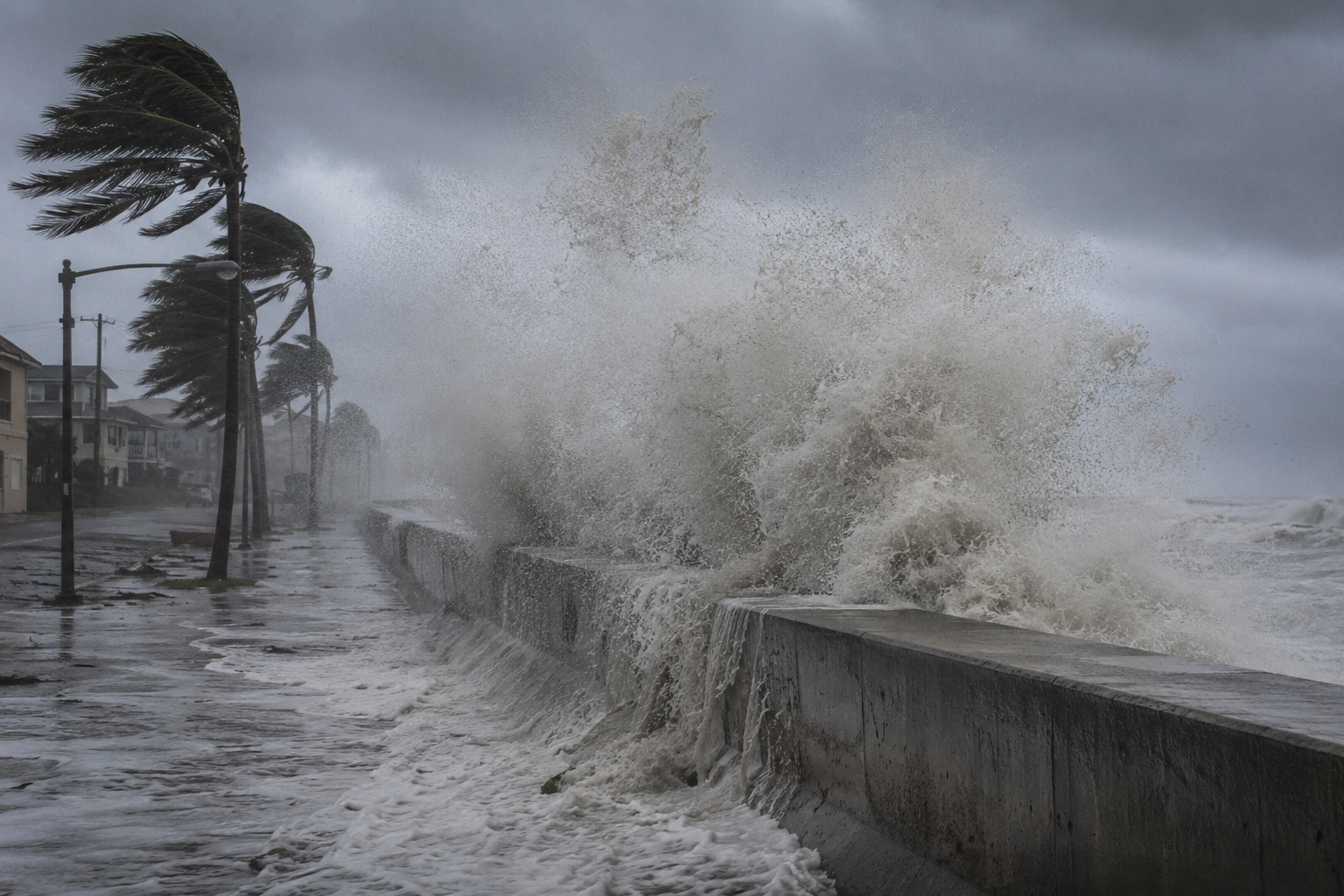
Helene was the strongest storm to hit this coastline in nearly 80 years. The surge overtopped the Gulf-side seawall in Madeira Beach by up to two feet and the bayside seawall by over four feet. Water levels at Madeira Beach measured 7.26 feet above normal high tide. Streets turned into rivers. Boats ended up in living rooms. Nearly 47,000 homes and more than 1,200 businesses across Pinellas County were impacted, and the total damage bill from Helene, Milton, and Debby has now exceeded $2.4 billion.
If you own waterfront property anywhere on the barrier islands, Treasure Island, Madeira Beach, Indian Rocks Beach, St. Pete Beach, Redington Shores, Tierra Verde, your seawall took a serious hit. Some of that seawall damage is obvious. A lot of it isn’t.
This is what you need to know.
What Helene Actually Did to Seawalls
Storm surge damages seawalls differently than wind does. It’s not dramatic. There’s no single moment of collapse. What happens is the surge forces water through every crack, seam, and weak point in the wall at volumes and speeds the structure was never designed to handle. As the surge recedes, it pulls soil with it through those same gaps. The wall may look fine from the outside. The ground behind it is not.
The combination of Boca Ciega Bay overtopping on one side and Gulf surge pushing in from the other created conditions on Pinellas barrier islands where some properties were hit with water from two directions simultaneously. That kind of bidirectional pressure is particularly destructive to seawall anchor systems and tiebacks, which are the internal rebar structures that hold the wall stable. Damage to tiebacks doesn’t show up on the surface until it’s already serious.
Then Milton arrived two weeks later. Winds hit 101 miles per hour in Treasure Island. The storm brought 18 inches of rain to St. Petersburg. Walls that had already been stressed by Helene’s surge took another beating. Pinellas County has issued more than 34,000 permits tied to hurricane recovery and completed roughly 85,000 related inspections. Contractors across the county are still finding damage that homeowners had no idea existed.
Why Your Seawall Might Look Fine and Still Be Failing
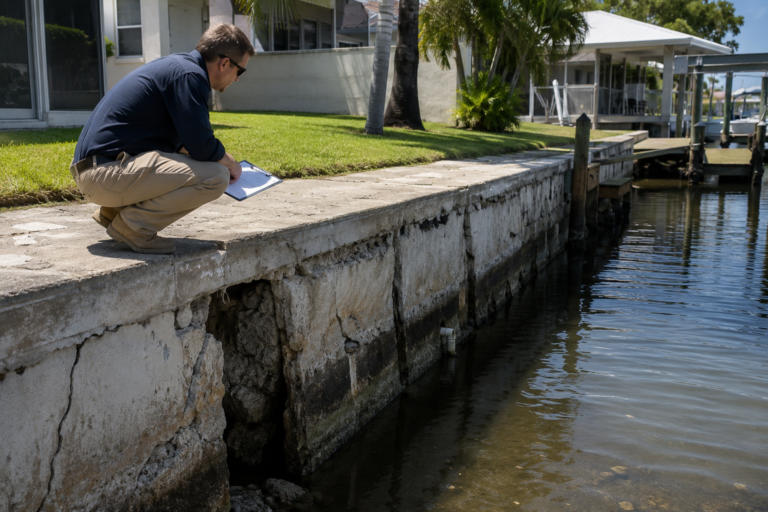
This is the part that catches people. They walk out to the water, the seawall looks like it always did, and they move on to the other thousand things on the post-hurricane list. Months later they notice the yard feels soft near the water, or a sinkhole appears behind the wall, or the cap starts cracking in ways it wasn’t before. By that point the damage has already progressed significantly.
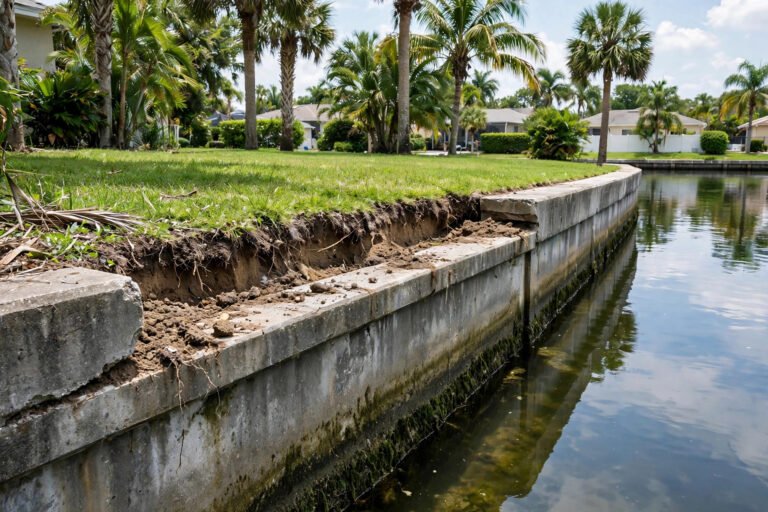
What Helene’s surge did to most Pinellas seawalls is create or expand internal voids, spaces behind the wall where soil has been pulled away by the receding water. You cannot see these from the surface. They grow slowly with each tide cycle, getting larger as more soil moves through whatever gaps or cracks the surge created or widened. The surface looks fine until it doesn’t, and when it gives way, it gives way fast.
A seawall that was already showing signs of age before the storms is in particular trouble. Many of the concrete seawalls on Pinellas barrier islands were built 30 to 50 years ago. Helene didn’t just damage them. It accelerated whatever deterioration was already happening, often by years.
The Warning Signs to Look For Right Now
Walk your seawall at low tide and look specifically for these things:
- Soil depressions or soft spots in your yard behind the wall. Any area where the ground feels spongy or has visibly sunk since the storms is a sign that soil is moving.
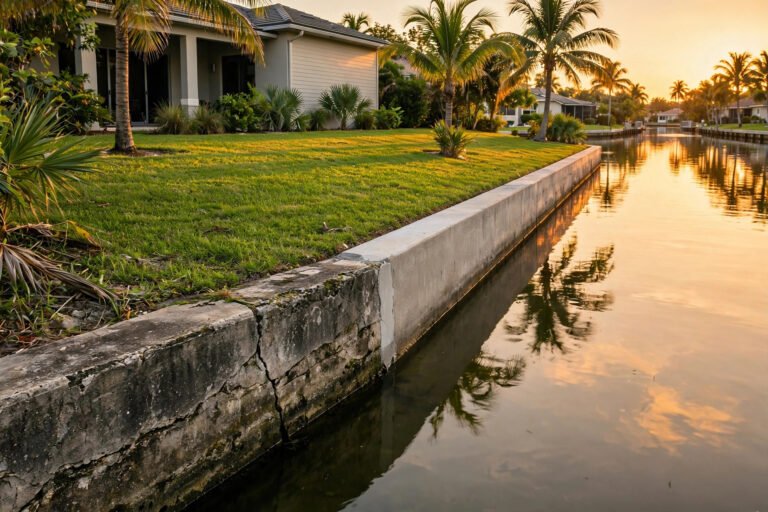
- Cracks in the cap or wall face that are new or have widened. If you can fit a finger into a crack, you need a professional assessment.
- The wall leaning or bowing in any direction. Sight down the length of the wall from one end. It should be perfectly straight.
- Water seeping through joints or the wall face at times when it wasn’t before. New seepage points mean new gaps that weren’t there before the storms.
- Rust staining that has appeared or spread. New rust staining means water is reaching the internal steel reinforcement through paths it wasn’t reaching before.
- Concrete near the waterline, including walkways, patios, or captain’s walks, that is sinking or cracking in ways that are new since the storms.
Any of these is reason enough to call a licensed contractor for an evaluation. Most offer free assessments. You’re not committing to a repair, you’re getting information.
The Permit and Recovery Picture Right Now
Here is something a lot of Pinellas homeowners don’t know: there is real money available for storm-related repairs, and the recovery programs are still active.
Pinellas County’s People First Hurricane Recovery Program has an $813 million budget from a federal HUD Community Development Block Grant. The program includes homeowner reconstruction and reimbursement funding, disaster relief reimbursements, and homebuyer assistance for those looking to purchase outside flood zones. The Homeowner Reimbursement Program covers completed repairs. If you’ve already paid for seawall work related to the storms, you may qualify for reimbursement of up to $50,000.
For seawall repair and replacement work specifically, Pinellas County has waived storm recovery permit fees. All seawall work still requires a permit, but the fee waiver removes one barrier for homeowners already stretched thin by storm costs.
One thing to be careful about: Pinellas County Sheriff’s Office arrested roughly 100 people in the months following the storms for contractor license violations or fraudulent contractor claims. Contractor fraud spikes after every major hurricane, and Pinellas was no exception. Before hiring anyone for seawall work, call the Pinellas County Construction Licensing Board at (727) 582-3100 and verify the contractor is licensed. It takes five minutes and protects you from a situation that has burned a lot of local homeowners already.
What the Recovery Timeline Looks Like
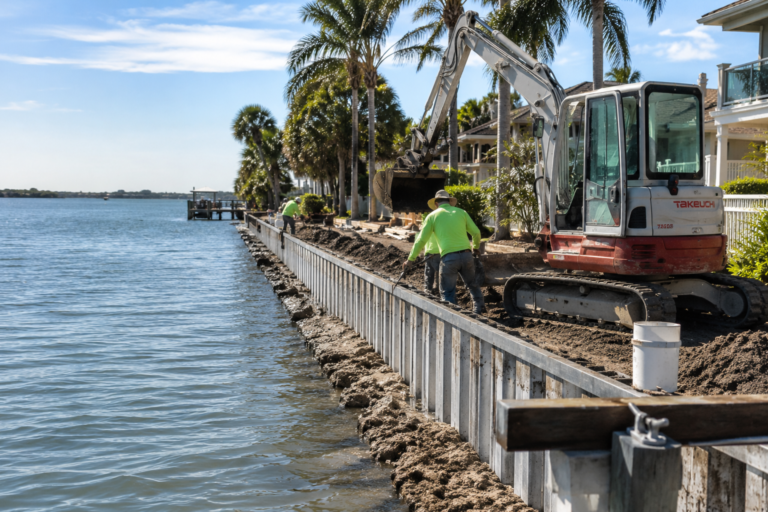
Most Pinellas repair projects are expected to be completed by the end of 2026, with some extending into 2027. The rebuild is still very much active. Contractor availability is stretched. Some homeowners are still waiting months for crews to become available for seawall work specifically, because the volume of hurricane-related jobs is still elevated across the county.
That means the time to call is now, not later. The homeowners who moved quickly after the storms are now getting their work done. Those who waited are further back in the queue and facing pricing that continues to reflect high post-hurricane demand.
Where to Start
If you haven’t had a professional look at your seawall since the 2024 storms, that’s step one. Not a contractor trying to sell you a replacement, but an honest evaluation from someone who can tell you what the wall actually needs.
SeawallAdvice.com connects Pinellas County waterfront homeowners with vetted local seawall contractors for free evaluations. Fill out the form below or call or text us at (727) 316-5675. We’ll connect you with someone who knows Pinellas County waterways within 24 hours.
Did Hurricane Helene damage seawalls in Pinellas County?
Yes, extensively. Helene’s surge overtopped Gulf-side seawalls in Madeira Beach by up to two feet and bayside seawalls by over four feet. Nearly 47,000 homes and businesses in Pinellas County were impacted, and seawall damage was widespread across the barrier islands including Treasure Island, Madeira Beach, Indian Rocks Beach, and St. Pete Beach.
Is there financial assistance available for seawall repair after Hurricane Helene?
Yes. Pinellas County’s People First Hurricane Recovery Program has an $813 million budget including homeowner reimbursement of up to $50,000 for completed repairs. Storm recovery permit fees have also been waived by Pinellas County. Visit recover.pinellas.gov for current program information.
How do I know if my seawall was damaged by Helene if it looks okay from the outside?
Helene’s surge often created internal voids behind seawalls by pulling soil away as the water receded. Signs to look for include soft spots or depressions in the yard behind the wall, new or widening cracks in the cap, any lean or bow in the wall, new seepage points, and sinking concrete near the waterline. A professional inspection is the only reliable way to assess damage that isn’t visible from the surface.
How do I verify a seawall contractor is licensed in Pinellas County?
Call the Pinellas County Construction Licensing Board at (727) 582-3100 and choose Option 2 for Licensing. Contractor fraud increased significantly after the 2024 hurricanes and verifying a license before signing any contract is strongly recommended.