How Pinellas County King Tides Batter Your Seawall in 2026
Understanding King Tides in Pinellas County
A “king tide” is a popular, non-scientific term used to describe the absolute highest predicted high tides of the year for a given coastal location. They are a normal, predictable occurrence and are not caused by storms or severe weather.
They typically occur when the Sun and Moon align. The gravitational pulls of the sun and the moon combine. This happens during a new moon or a full moon, creating a stronger tidal effect (a “spring tide”).
They can also happen when the Moon is closest to Earth: The moon’s orbit is elliptical, meaning it is not a perfect circle. When the moon reaches the closest point to Earth in its orbit, a point called the perigee, its gravitational pull on the ocean is at its absolute.
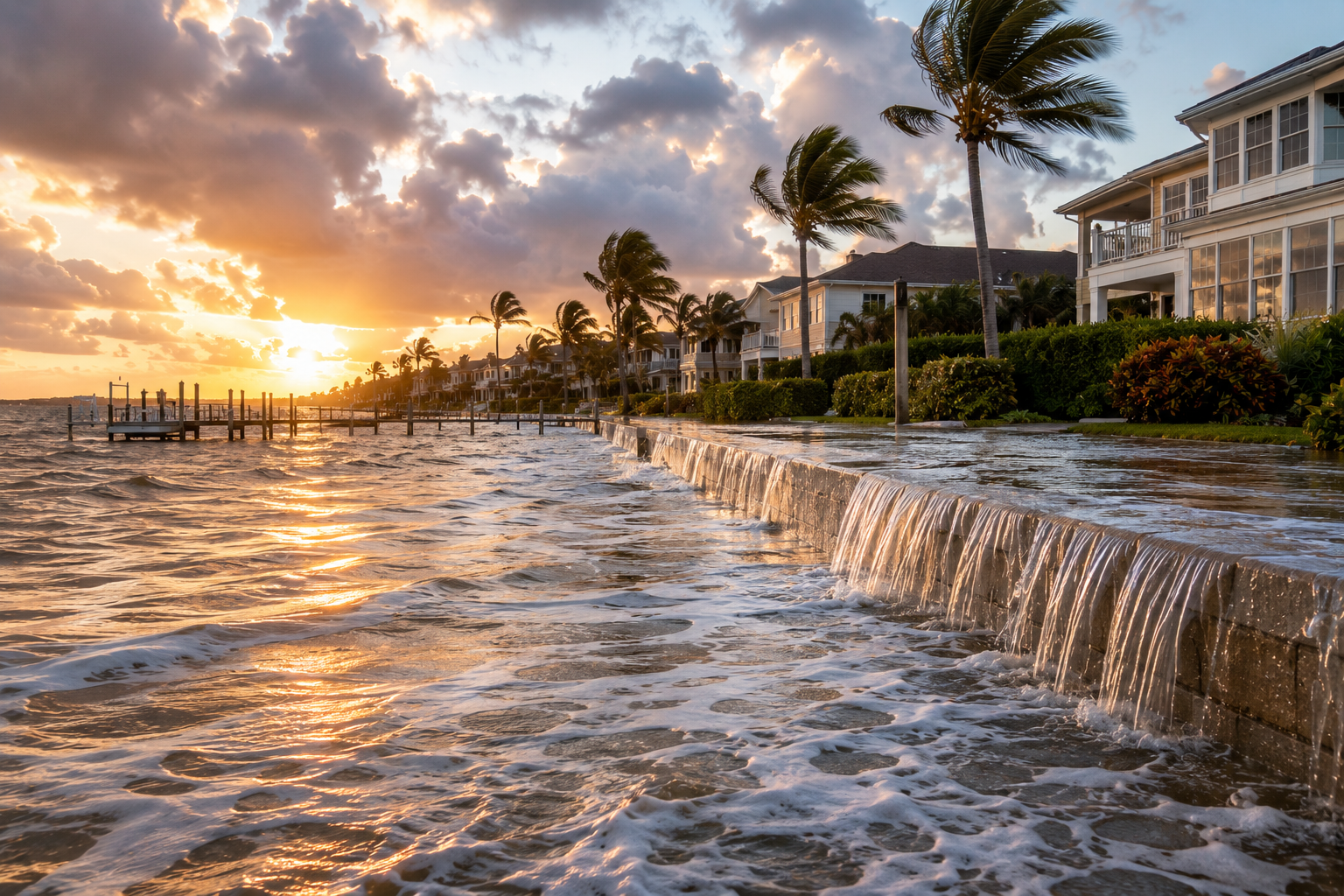
King tides bring the highest water levels of the year to Pinellas County beaches and waterways. These events occur several times annually and push water far beyond normal high tide lines. Homeowners along the coast notice water reaching places it usually does not touch.
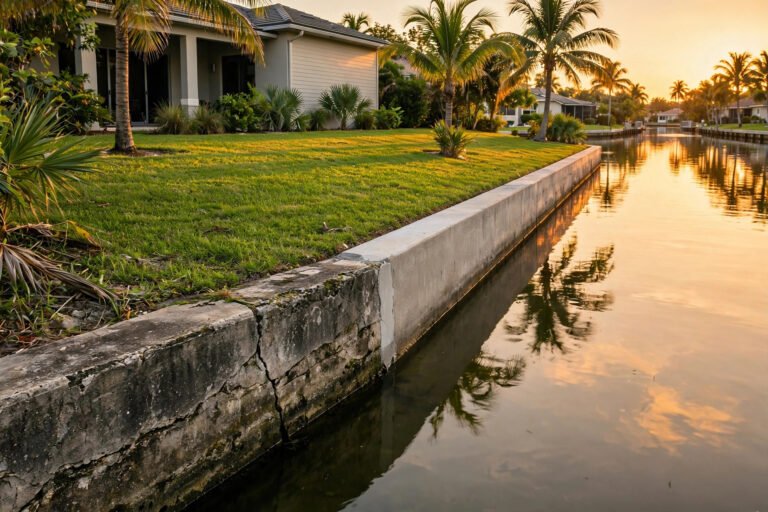
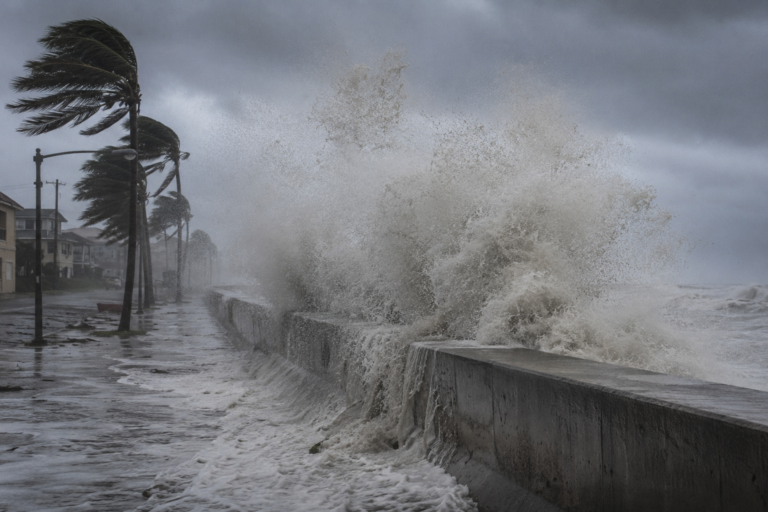
When king tides arrive they create extra pressure on every seawall in their path. The added height and duration of the water allow waves to overtop structures and seep into the soil behind them. This repeated action weakens even well-built walls over time.
How King Tides Erode Soil Behind Seawalls
Water that flows over the top of a seawall during king tides carries sand and soil away from the landward side. This process leaves voids that cause the wall to tilt or settle. Properties in areas like Treasure Island and Madeira Beach see this problem more often because of their exposure to the open Gulf.
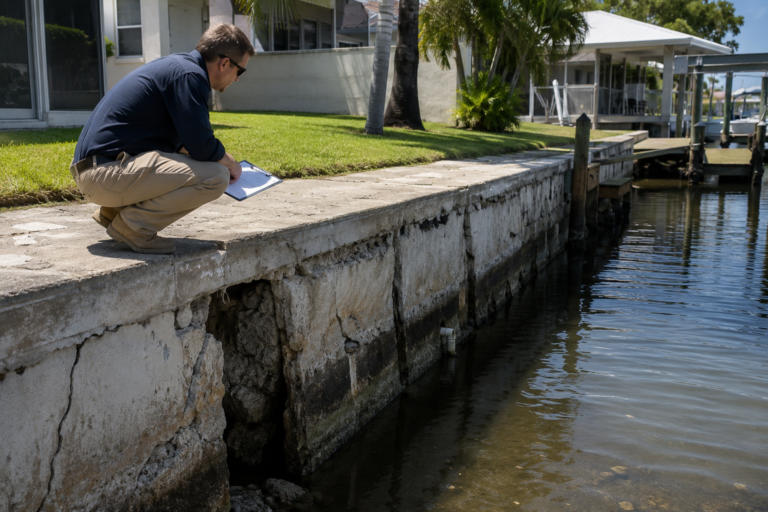
Once soil begins to wash out, the foundation of the seawall loses support. Small cracks that seemed harmless can grow quickly when water keeps pushing against the structure. Regular inspections become important after each king tide cycle.
Local Impact in St. Petersburg and Clearwater
Seawalls in St. Petersburg neighborhoods near Coffee Pot Bayou face extra stress from king tides that push through Boca Ciega Bay. The same holds true along Clearwater Beach where boat traffic adds to the wave energy. These locations require walls built to higher standards than inland canals.
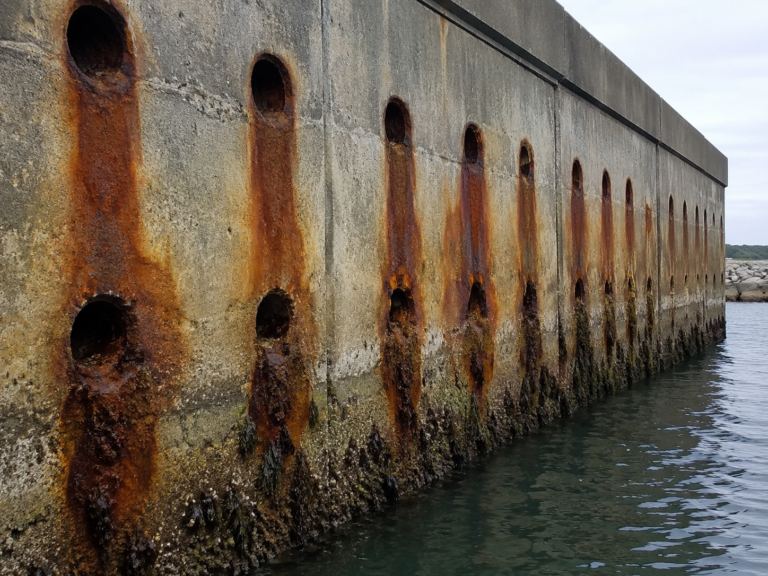
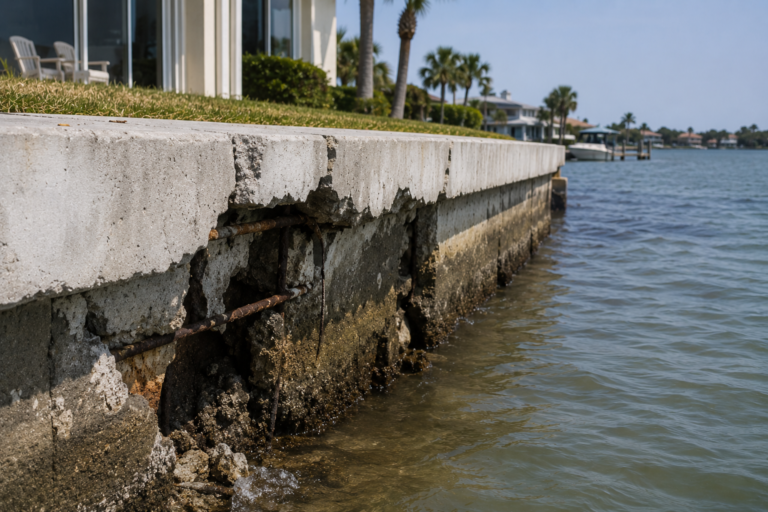
Residents often notice standing water in their yards for hours after the tide recedes. This lingering moisture speeds up corrosion of any metal ties or rebar inside the seawall. Addressing drainage right after king tides helps limit long-term damage.
Structural Stress From Prolonged High Water
King tides do not just reach higher levels. They stay high for longer periods than ordinary tides. This extended contact lets water find every small gap in the wall panels or joints. Over multiple days the pressure can separate panels that once fit tightly together.
Wooden seawalls suffer from rot that starts at the waterline and moves upward. Concrete panels may show spalling where reinforcing steel begins to rust. Vinyl sheets can bow outward when the backfill becomes saturated and heavy.
Preparing Your Property Before 2026 King Tides
Start by checking the elevation of your seawall relative to predicted king tide heights for the coming year. Adding a cap or raising the top of the wall by a few inches can prevent overtopping in many cases. Make sure weep holes remain clear so water drains instead of building pressure behind the structure.
Planting native vegetation along the top of the seawall also helps hold soil in place. The roots create a natural barrier that slows erosion when water flows over the wall. Combine this with periodic professional inspections to catch issues early.
Long-Term Solutions After Repeated King Tide Events
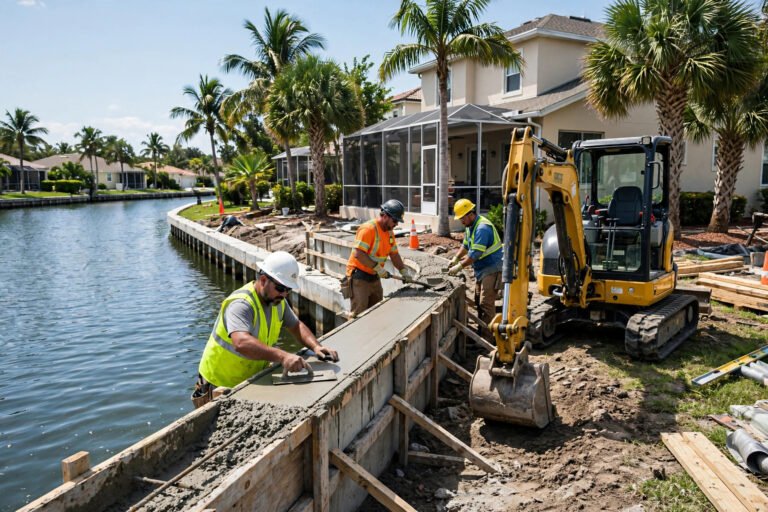
Some Pinellas County properties need more than minor repairs once king tides have caused repeated damage. Full replacement with a higher and stronger wall often becomes the most cost-effective choice. New materials and designs can better handle the increasing frequency of these high-water events.
Working with a local contractor familiar with Pinellas County permit requirements ensures the new seawall meets current standards. This approach protects your investment and reduces future maintenance costs.
Talk to a Local Seawall Expert at (727) 316-5675 to schedule an inspection before the next king tide cycle.
What exactly are king tides and why do they matter in Pinellas County?
King tides are the highest predictable tides of the year caused by the alignment of the sun and moon. In Pinellas County they push water against seawalls longer and higher than normal tides, leading to erosion and structural stress.
How often should I inspect my seawall after king tides occur?
Check your seawall within a week after each king tide event and schedule a professional review at least twice a year. Early detection of soil loss or cracks prevents larger repairs later.
Can adding height to an existing seawall stop king tide damage?
Raising the top of your seawall by several inches often prevents overtopping during king tides. A local expert can determine if your current structure can safely support the addition.
Which Pinellas County areas face the most king tide pressure on seawalls?
Waterfront homes in Treasure Island, Madeira Beach, St. Petersburg, and Clearwater Beach experience the strongest effects because of direct Gulf and bay exposure.