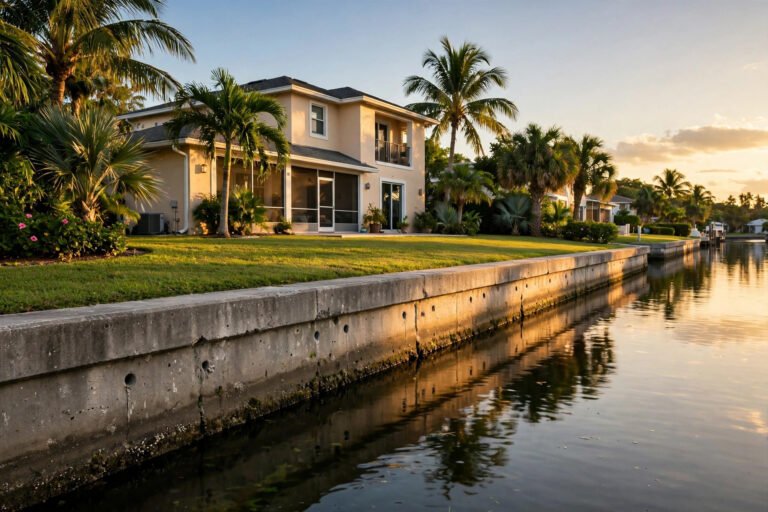
How to Prepare Your Seawall for King Tides in Pinellas County (2026 Guide)
The highest tides of the year are about to roll through Pinellas County. NOAA’s Gulf Coast predictions put the peak king tide window at October 27 through 31, with the single highest predicted tide of 2026 landing around October 27, and more windows following in late November and around December 23. For a week or so, water in the canals and along the Intracoastal will sit higher, stay longer, and push harder against every seawall in the county than at any other point this year.
King tides are not storms. They show up on a sunny day and leave quietly, which is why they catch homeowners off guard. A seawall that looks fine in October can come out of a king tide cycle with new gaps at the cap and fresh soft spots in the yard. Here is a practical checklist: what to do before the water rises, what to watch while it is high, and what to inspect after it falls.
When the 2026 King Tides Hit Pinellas County
Based on NOAA harmonic predictions for Gulf Coast stations, the remaining 2026 king tide windows look like this. October 27 through 31 is the big one, built around the October 26 full moon and the moon’s closest approach to Earth, which stack their gravitational pull and produce the highest predicted water levels of the year. The next windows fall November 24 through 27 and around December 23. Each window lasts several days, not hours.
Two local factors can push water above or below the predictions. First, wind. Tampa Bay is a broad, shallow basin, and sustained onshore winds trap water inside it and pile it higher than the tide chart says. Second, rainfall. A rainy stretch during a king tide window has nowhere to drain, because the stormwater system empties into canals and the bay by gravity, and high water blocks the outflow. Check real-time water levels at the NOAA St. Petersburg tide station (8726700) during each window. If the observed level is running well above the prediction, your seawall is taking a beating the chart never promised.
The bottom line: starting October 27, your wall will see the highest water of the year for several consecutive days, and again in late November and late December.
Before the High Water: Your Seawall Prep List
Do this walk in the week before the window opens. You need daylight, dry conditions, and about thirty minutes. Bring your phone. Dated photos taken now are your baseline for everything you inspect after the tides.
Walk the cap line and look for gaps
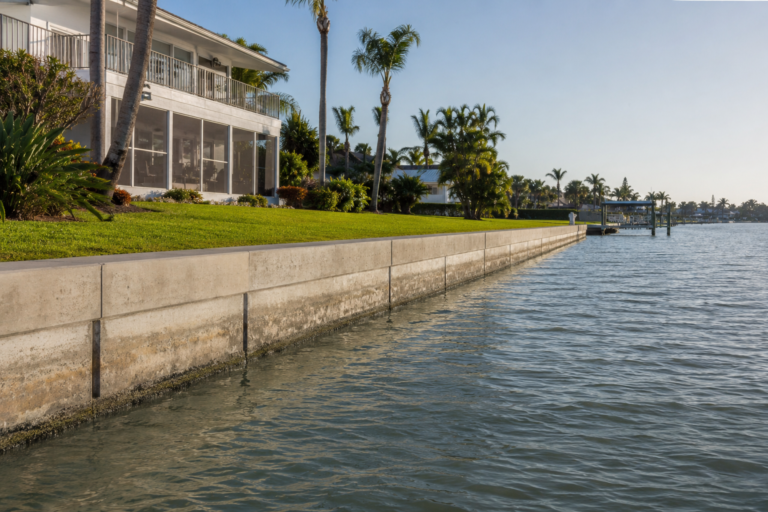
Start at one end of your wall and walk the full length on the yard side, looking down at the joint where the cap meets the soil behind it. On a healthy wall the backfill sits tight against the cap with no visible slot. If you see a gap, even a finger-width one, water will find it during the king tides and start carrying soil out through it. Small gaps can be temporarily packed and will need real attention after the cycle, but knowing where they are now means you can check exactly those spots later.
Look along the cap itself for cracks, spalling, or joints that have opened up since the last time you looked. Pay attention to where the cap meets the wall panels below it. That seam is a classic entry point for water, and a king tide that laps against it for hours will exploit any weakness it finds.
Make sure your drainage can breathe
A seawall survives high water the way a house survives a storm, by letting water pass through in controlled ways instead of building up pressure behind the wall. Your seawall weep holes are the pressure relief valves, and they need to be clear before the water rises. At low tide, look at each weep hole and clear any silt, algae, or barnacle growth gently with a stiff brush or a hose. Do not ram a rod into it. A blocked drain during a king tide cycle turns trapped water into hydraulic pressure against the wall panels.
Then go back to the yard side and look at the surface drainage. Roof downspouts and yard drains that dump water right behind the seawall are feeding the exact soil you are trying to protect. During a king tide window, every gallon of rainwater that lands behind the wall has to go somewhere, and the wall is in the way. If you can extend a downspout or clear a clogged yard drain before October 27, do it.
Tidy the yard side of the wall
King tides do not just push water against the wall. When they overtop it, they drag loose material off the yard and drop debris along the cap. Move anything loose within a few feet of the wall: planters, hoses, pool toys, bags of soil or mulch. Check that irrigation heads near the wall are not aimed at the backfill. An irrigation zone that soaks the soil behind the cap all week, right as the tides peak, is stacking fresh water on top of tidal pressure.
If you keep a boat at the dock, check your lines this week. Boats that slam against pilings or the wall during king tide peaks transmit every hit straight into the structure. Snug the lines, add fenders where the hull can reach the wall, and remember the water will sit higher than you are used to.
During the Tides: What to Watch For
Once the window opens, your job is observation, not heroics. Do not walk on a submerged cap or wade through tidal water. Saltwater is corrosive and carries street runoff, and a wet cap is slick. Watch from the yard and take notes.
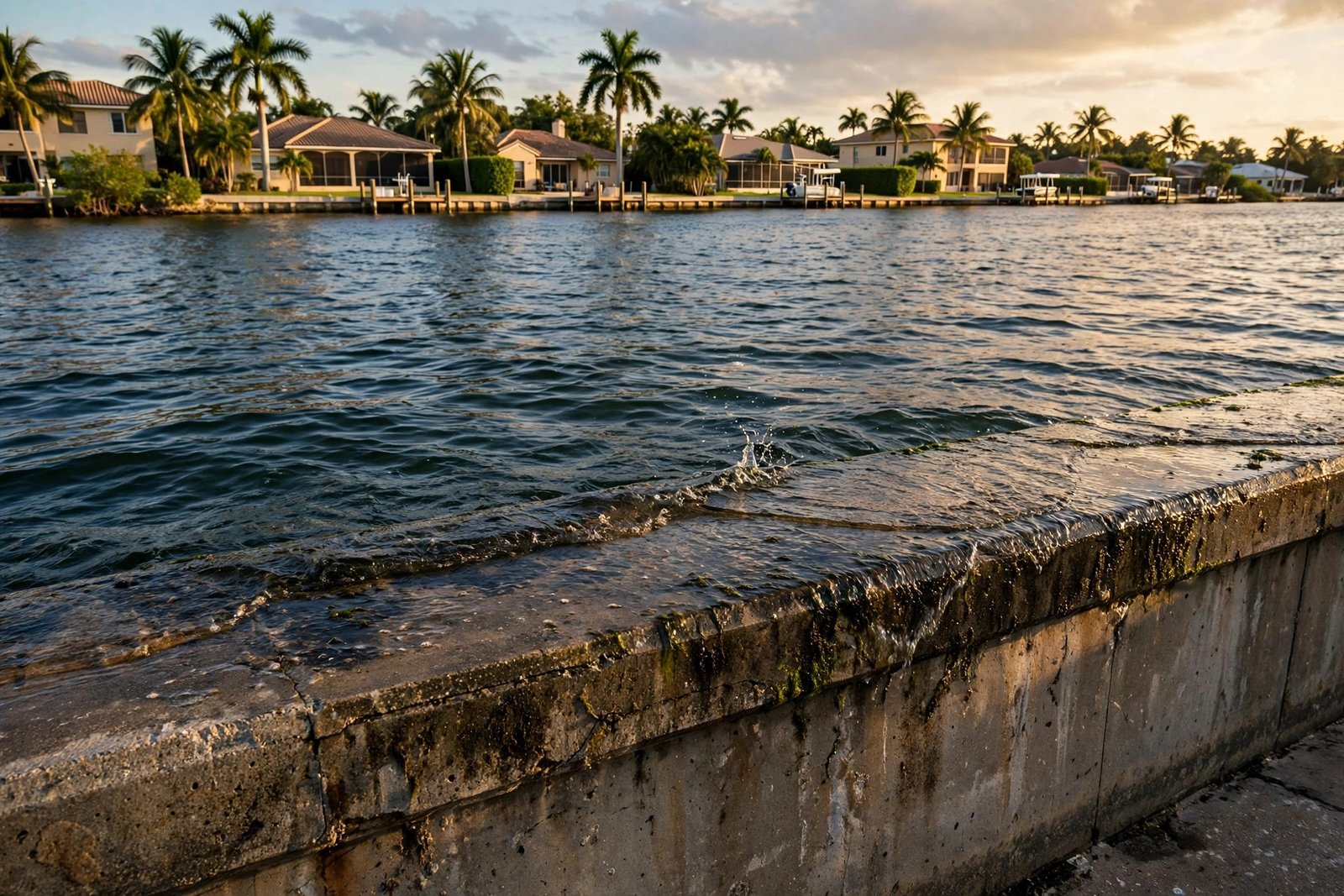
First, note where the water reaches. Does it lap at the cap but stay below it, or does it flow over? Overtopping that runs across the yard carries soil with it on the way back out, and that is the mechanism that opens voids behind the wall. Mark the high-water line with a stick or a piece of tape on a fence post. If this is the first king tide cycle you have watched at this house, that mark becomes your personal record of how high the year’s biggest tides reach on your property.
Second, watch the joints and seams from the yard side as the tide turns. Water streaming through a panel joint or a cap seam in a visible jet, rather than a slow weep, means an opening big enough to move soil. You will not fix it mid-cycle, but you will know exactly where to look when the water drops.
Third, keep an eye on the calendar, not just the tide chart. A king tide window lasts several days, and the damage is cumulative. If heavy rain or strong onshore wind arrives during the window, expect water to run higher than predicted.
After the Tide Falls: The 10-Minute Inspection
Do this within a day or two of the last high tide in the window, while the evidence is fresh. Walk the same route as before, phone in hand, and compare against your baseline photos.
Check the yard for new soft spots within a few feet of the wall. Press your foot into the soil along the cap line. If it gives where it did not before, you have fresh soil loss behind your seawall, and the cycle found a leak path. Look at pavers, walkways, and pool decks near the waterline for new settling or cracking. Sandy fans deposited on the yard surface, or muddy water still draining from weep holes a day after the tide falls, are both signatures of soil that washed out through the wall.
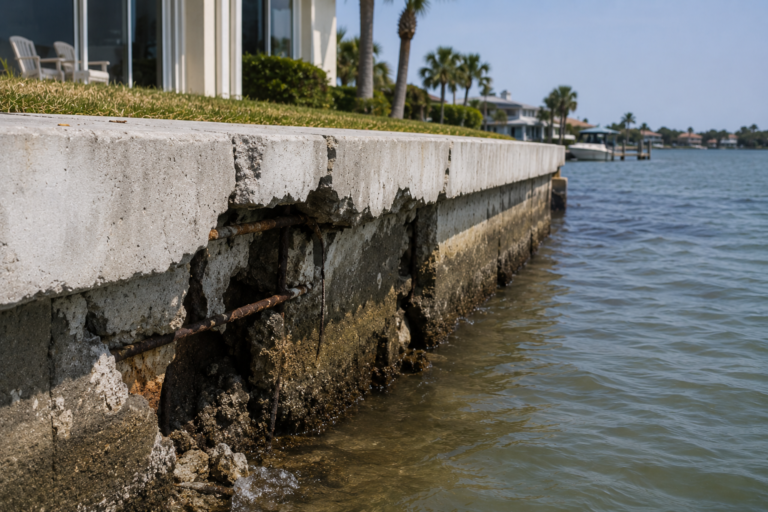
Look at the cap line again for gaps that widened. Measure them if you can, even roughly, because “the gap grew from a finger to a fist between October and December” is the kind of detail that turns a vague worry into an actionable repair plan. Check the water side of the wall at low tide if you have safe access. New cracks in the panels, fresh spalling, or joints that have visibly opened since your last look all go on the list.
Write it all down with dates. A dated photo log is the single most useful thing you can hand a marine contractor, because “here is exactly what changed and when” beats “I think something changed.”
When “Prep” Becomes “Repair”
Preparation handles maintenance. It does not fix structural problems, and king tides have a way of revealing the ones you have been putting off. A few findings mean you should stop prepping and start planning a repair before the next window.
A wall that has visibly leaned, bowed, or dropped at one end is telling you its support system is failing. Exposed or broken tieback hardware, panels with cracks wide enough to fit a finger, and cap sections that have separated from the wall below are all structural, not cosmetic. If your post-tide inspection finds any of these, the November and December windows will make them worse, not better.
This is also the point where honesty about the wall’s age matters. Much of Pinellas County’s waterfront was built out from the 1960s through the 1980s, and those original concrete walls are now fifty-plus years old with tired joints. If you are unsure whether what you are seeing is maintenance or structural, read through the seawall repair vs replacement guide and then get a professional set of eyes on it. A marine contractor’s inspection before the late November window costs far less than the damage a compromised wall can take in one bad cycle.
Talk to a Local Seawall Expert
The year’s biggest king tides arrive October 27, and the best time to get your seawall checked is before the water rises. If your pre-tide walk turned up gaps at the cap, clogged weep holes, soft spots, or anything structural, do not let it ride through three more windows. Call (727) 316-5675 and talk to someone who works on Pinellas County seawalls every day.
Q: When are the king tides in Pinellas County in 2026?
A: NOAA predictions put the Gulf Coast king tide windows at October 27 through 31, November 24 through 27, and around December 23, 2026. The October window, built around the October 26 full moon, is expected to bring the highest predicted tides of the year. Wind and rain can push actual water levels above or below the predictions, so check the NOAA St. Petersburg tide station during each window.
Q: Can king tides damage my seawall if there is no storm?
A: Yes. King tides are not storms, but they hold water higher against the wall for longer than normal tides, sometimes for several consecutive days. That sustained pressure works panel joints loose, pushes water through cracks, and carries soil out from behind the wall. Several days of elevated water can move more soil than one storm surge, especially on older walls.
Q: What should I check on my seawall before a king tide?
A: Walk the full length and look for gaps between the cap and the soil, cracks in the cap, and clogged weep holes. Make sure yard drainage and downspouts are not dumping water right behind the wall, and clear loose items from the yard side. Take dated photos as a baseline so you can compare after the tides fall.
Q: My yard has new soft spots after the king tides. What does that mean?
A: It usually means water moved soil out through the wall during the high tides, opening voids in the backfill. Small new soft spots deserve a professional look before the next window, because voids grow with every cycle. Do not just fill them with dirt, since fresh fill washes right back out through the same leak path. The joints need sealing and the soil needs stabilization first.