Seawall Weep Holes: Why Drainage Matters More Than the Wall Itself
Most Pinellas County waterfront homeowners never think about their seawall until something goes wrong. And when something does go wrong, almost everyone blames the wall. The concrete cracked, the panels leaned, the cap separated. But ask any local seawall contractor what killed the wall, and you will hear a different answer most of the time. It was not the wall that failed first. It was the drainage behind it.
Weep holes are the small openings along your seawall that let trapped water escape. When they clog, water builds up behind your wall with nowhere to go, and that trapped water exerts a slow, relentless force that can crack concrete, bow panels, and wash away the soil your whole backyard is sitting on. Here is how they work, how to tell when they are failing, and what to do about it before a small drainage problem becomes a five-figure seawall problem.
What Weep Holes Actually Are
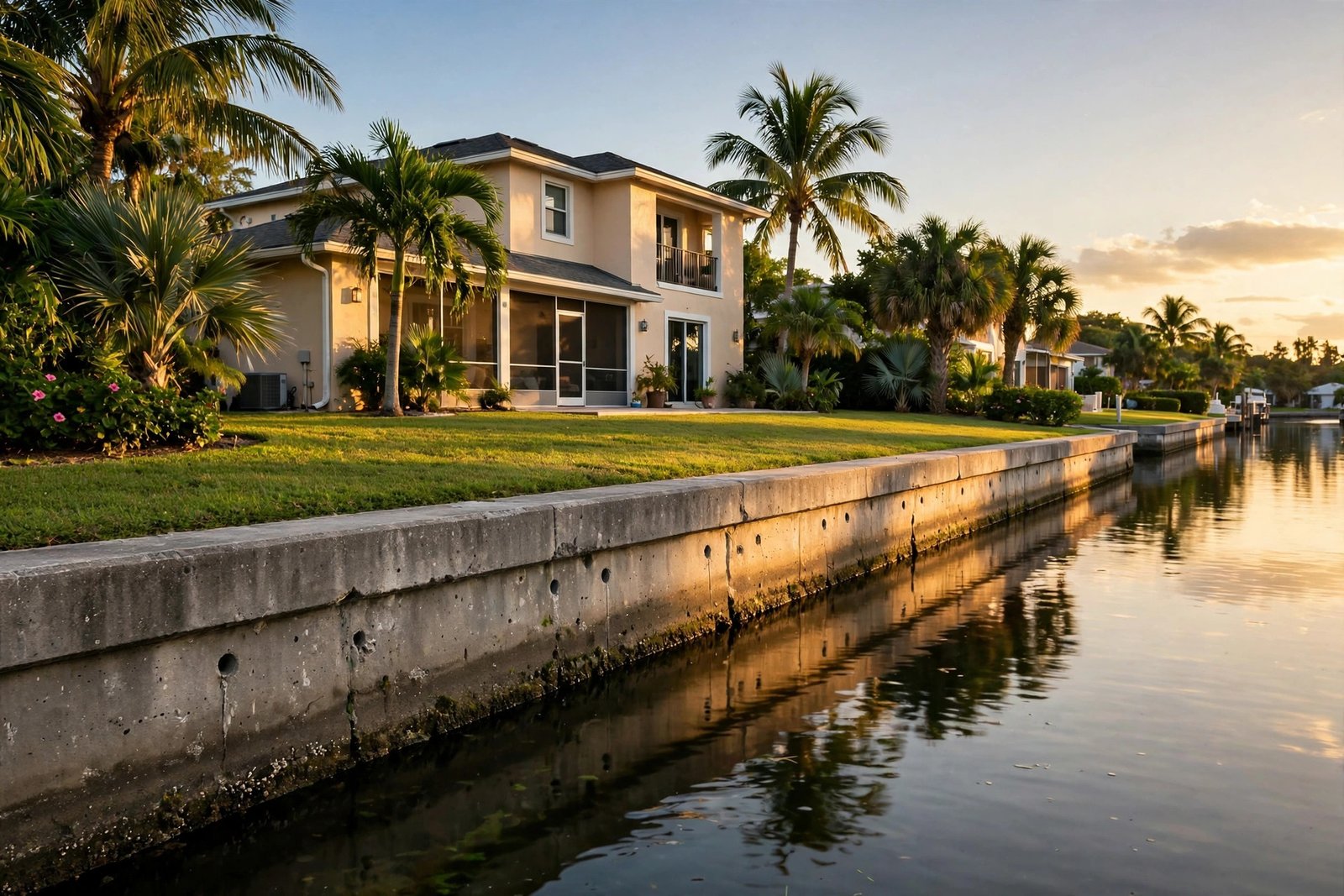
Weep holes are simple by design. They are small openings, usually an inch or two across, set into the face of a seawall just above the typical waterline. Their only job is to let groundwater that collects behind the wall drain out into the canal, bayou, or open water in front of it. No moving parts, no maintenance contract, no batteries. Just a hole that lets water do what water wants to do.
The reason they exist comes down to physics. Every time it rains hard or a king tide pushes water into the soil along the shoreline, groundwater collects against the back of your seawall. Without a way out, that water creates what engineers call hydrostatic pressure, a steady outward push against the wall that acts like a dam holding back a reservoir. Your seawall was designed to hold back soil, not an underground lake. Weep holes are the pressure relief valves that keep that from happening.
On a properly built wall, the weep holes work with the soil behind the wall to create an equilibrium. Water levels equalize on both sides, and the only force the wall has to resist is the soil itself. Take the weep holes out of the equation and the wall is suddenly doing two jobs it was never built to do, holding back water and holding back saturated, heavy soil at the same time. That is when failures start.
The Pressure Problem Hiding Behind Your Wall
Here is the part that surprises most homeowners. A cubic foot of water weighs about 62 pounds. Behind a 100-foot seawall, a couple of feet of trapped water can add up to tons of lateral force pushing against panels and caps that were engineered for soil loads only. After one of our summer downpours or a tropical system pushing surge into the bays, the water behind a wall with no working drainage can rise fast and stay high for days. Our sandy Pinellas soil makes it worse, because sand saturates quickly, and saturated soil is heavier and weaker than dry soil.
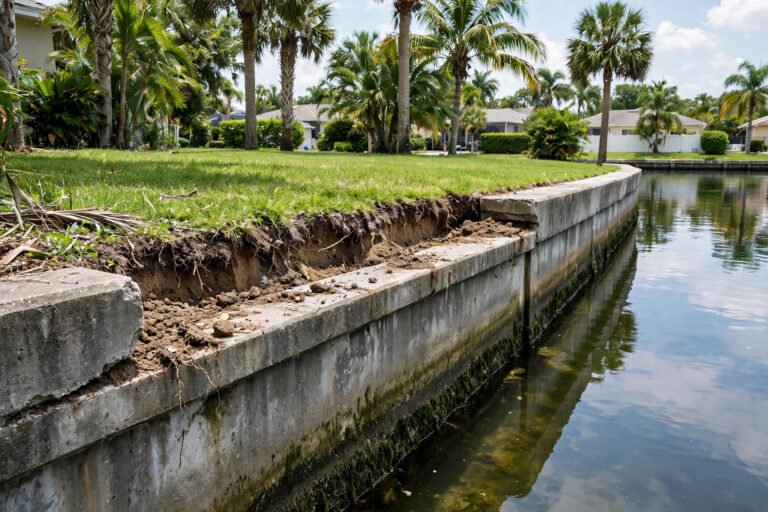
Over time, trapped water does something even worse than pushing. It moves soil. Water forced to find other ways out seeps through joints between panels or under the cap, and it carries soil with it. Every grain of sand that washes out from behind your wall is a grain that is not supporting your yard, your pavers, or your pool deck anymore. This is how homeowners end up with mysterious sinkholes ten or twenty feet back from the shoreline, on a wall that still looks fine from the water.
That extra pressure does more than push on panels and caps. It also overloads the steel anchoring system buried behind the wall: saturated soil is heavier and weaker, so seawall tiebacks have to hold back far more than they were designed for, and a wall with long-failing drainage often has anchors that are already struggling by the time anyone notices the lean. If your drainage has been poor for years, have the anchoring system inspected along with the weep holes.
Signs Your Weep Holes Are Not Doing Their Job
Clogged weep holes rarely announce themselves. You will not get a warning light. But your wall and your yard will tell you if you know where to look. Walk your shoreline after a heavy rain.
Water Staining and Dark Streaks on the Wall Face
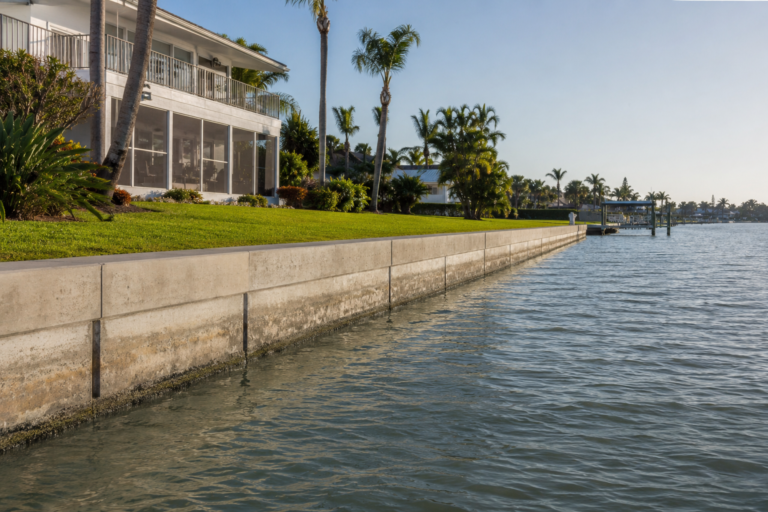
Look at your seawall from the water side at low tide. If you see dark vertical streaks running down the face of the wall, or rust-colored staining around the joints, that is water escaping somewhere it should not. Healthy weep holes produce a clean, steady drip after rain. Water forced through cracks and joints leaves staining behind, and it tells you the designed drainage path is blocked.
Sinkholes and Soft Spots in the Yard
This is the classic symptom. A dip in the grass, a paver that suddenly sits lower than its neighbors, a soft patch near the dock where your foot sinks a little. If you see soil loss behind the wall, water is carrying your soil out through paths that should not exist, which means the weep holes are not relieving pressure the way they were designed to. If you have spotted other signs your seawall is failing, soil loss behind the wall usually shows up alongside them.
Sediment Washing Out of the Weep Holes Themselves
It sounds backwards, but a weep hole that is gushing muddy water or discharging visible sediment is a red flag, not a good sign. Clean weep holes drain relatively clear water. When the discharge is full of sand and soil, it means the filter material behind the wall has broken down and the hole is now eroding the backfill instead of just draining water. That erosion accelerates fast, and it is one of the clearest early warnings that a bigger seawall repair in Pinellas County is coming if you ignore it.
Pooling Water That Lingers for Days
After a big rain, some standing water near the shoreline is normal. But if water pools behind your wall for days after the rain stops, while your neighbor’s yard drains normally, your drainage system is not keeping up. The ground behind the wall is saturated, the weep holes are not relieving it, and every day that pressure sits there is another day of stress on the wall. By the time the wall itself starts moving, with a cap separating or panels leaning waterward, drainage has usually been failing for a while.
Why Weep Holes Clog in Pinellas County
Weep holes do not clog because homeowners are careless. They clog because our environment is hard on them. Fine sand and silt migrate toward the holes with every wet cycle and gradually pack them shut. Algae and marine growth colonize the openings on the water side, especially on walls that sit in the water most of the tidal cycle. Landscaping is another quiet killer. Mulch, leaf litter, and irrigation runoff wash organic debris against the back of the wall, and that material mats down over the drainage path.
Some walls were also built with too few weep holes, or none at all. Older walls from the 1960s and 70s, which are common along our canals in places like Shore Acres, Jungle Terrace, and the older sections of St. Pete Beach, sometimes predate modern drainage standards. After Hurricane Helene, contractors across the county found walls that had been standing on clogged drainage for years, and the surge was the first real test that drainage had quietly failed long before. The damage Helene did to Pinellas County seawalls was worst on older walls where drainage had been neglected.
French Drains: Your Wall’s Backup Plan
Weep holes handle water at the wall face, but many Pinellas County seawalls also rely on a second line of defense: a French drain running along the landward side of the wall. This is a gravel-filled trench, usually with a perforated pipe inside, that collects groundwater and carries it along the wall to a discharge point instead of letting it press directly against the panels. When the French drain clogs with silt, the weep holes have to do the whole job alone, and they usually cannot.
French drains need their own upkeep. The gravel settles and needs replenishing, the perforated pipe can clog with fine silt, and tree roots love to invade the trench. If your property has a French drain behind the seawall and nobody has touched it in twenty years, assume it needs attention. A contractor can inspect it with a camera scope in an afternoon and tell you whether it is flowing or finished.
What to Do When Drainage Is Not Working
The good news is that drainage problems are among the cheapest seawall problems to fix, if you catch them early.
Start With a Simple Inspection
You can do this yourself. At low tide, walk the water side of your wall and look at every weep hole. If you see holes packed with sand, plugged with algae, or buried under marine growth, clear them gently with a stiff brush or a low-pressure hose from the water side. Never blast them with a pressure washer, because you can drive sediment deeper into the hole. Check them again after the next heavy rain and watch for a steady, clean drip.
Consider Filter Upgrades
If your weep holes clog again within months, the problem is what is behind them. Modern weep hole filter inserts sit inside the opening and block soil while letting water pass. They pull out for rinsing and reinstall in minutes, which turns a recurring headache into a simple maintenance task. Several Florida seawall repair companies now install these as standard practice when they retrofit drainage on older walls, at a fraction of the cost of structural repairs.
When to Call a Professional
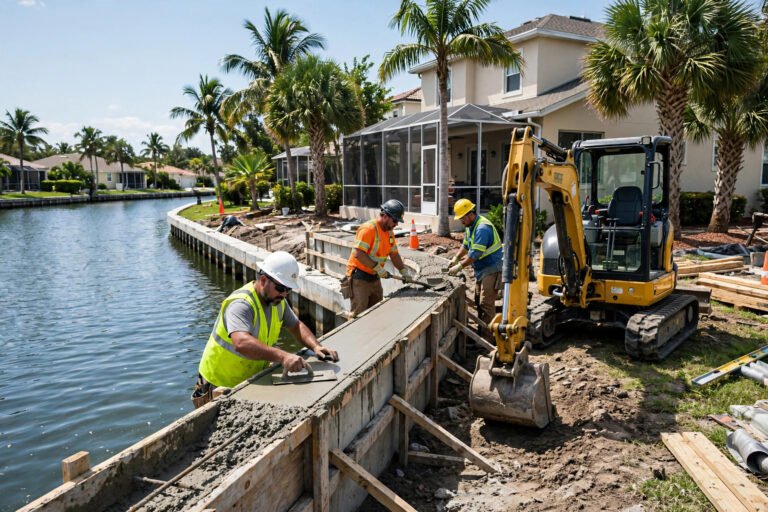
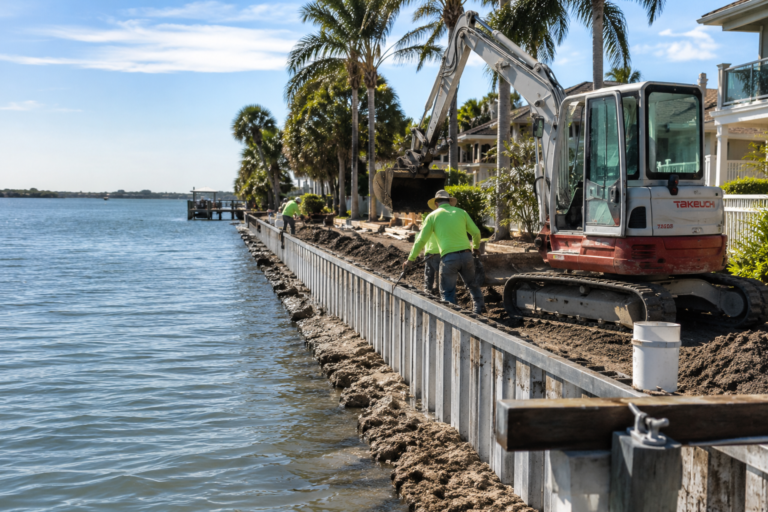
Call a seawall contractor when you see soil loss, sinkholes, wall movement, or sediment pouring from the holes. Those symptoms mean the drainage failure has already caused damage behind the wall, and the fix usually involves filling the voids, often with polyurethane foam injection that stabilizes the soil and stops further erosion. A proper inspection will tell you whether you are looking at a drainage tune-up or a structural repair.
Talk to a Local Seawall Expert
Drainage is the cheapest thing on your seawall to maintain and the most expensive thing to ignore. If you walked your wall and found clogged weep holes, soft spots in the yard, or staining you cannot explain, get a local opinion before the next storm tests it for you. Call (727) 316-5675 and talk to someone who works on Pinellas County seawalls every day.
Q: How many weep holes should my seawall have?
A: Most residential seawalls in Pinellas County have weep holes spaced every 6 to 10 feet along the wall face. If your wall has far fewer than that, or none you can find, have a contractor evaluate whether the drainage was designed to modern standards. Older walls from the 60s and 70s sometimes have minimal or no weep holes at all.
Q: Can I add weep holes to an existing seawall?
A: Yes, and it is one of the more common seawall upgrades in Pinellas County. A contractor can core new weep holes through the wall face and install filter inserts behind them. It costs far less than structural repair or replacement, and it is often done alongside foam injection to fill voids behind the wall.
Q: How often should I check my weep holes?
A: Twice a year is a good rhythm, once before hurricane season in late spring and once after it in the fall. Also check after any major storm or unusually heavy rain. You are looking for holes that are open, draining clean water, and not discharging soil. If you live on open water or near a busy boat channel, check more often, since wave action packs sediment into the holes faster.
Q: My neighbor’s seawall is failing. Can that hurt mine?
A: It can. Seawalls along the same shoreline share soil and water conditions, and a failing wall next door can redirect water flow and erosion toward your property. Water does not respect property lines. If your neighbor’s wall is leaning or losing soil, make sure your own drainage is in top shape before their problem becomes yours.