Vinyl vs Concrete Seawall in Pinellas County
The Short Answer for Pinellas County Homeowners
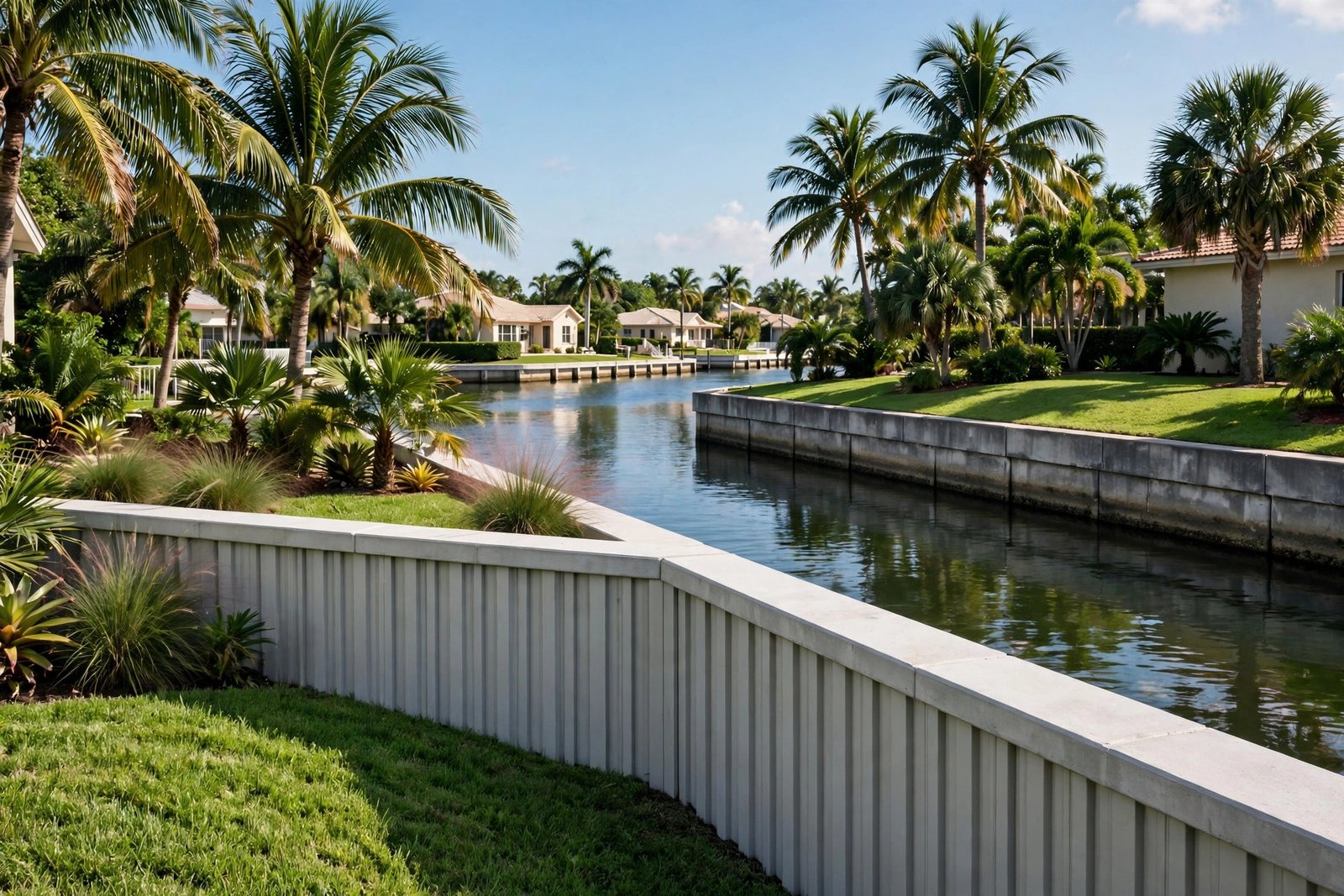
If your seawall is failing and you are choosing a replacement in 2026, here is the honest local answer: vinyl wins on lifespan and maintenance in our saltwater, concrete wins on brute strength and wall height. Most residential replacements going in around Pinellas County right now are vinyl sheet pile topped with a concrete cap, because that combination gives you the corrosion resistance of vinyl with the finished look and walkable surface of concrete.
That said, the right choice depends on your shoreline. A calm canal in Shore Acres faces different forces than an open-water lot on the Gulf in Indian Shores. This guide breaks down the real differences in cost, lifespan, storm performance, and upkeep so you can talk to contractors with confidence.
What a Vinyl Seawall Actually Is
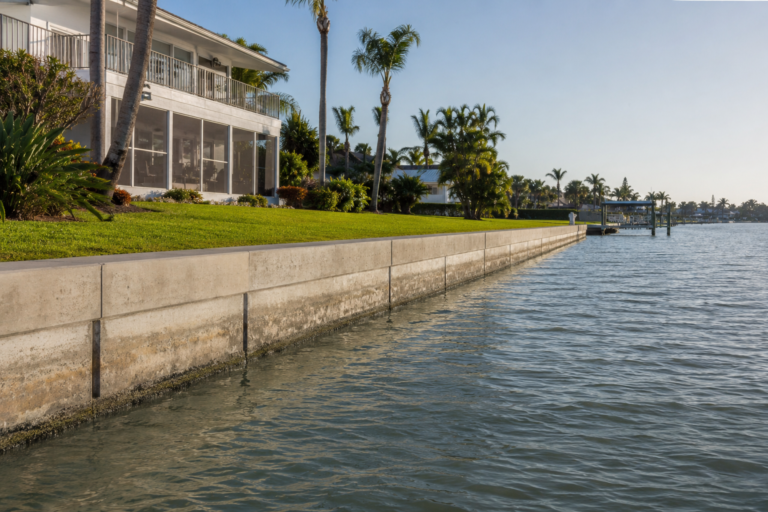
A vinyl seawall is built from interlocking PVC sheet piles driven deep into the ground along your shoreline. The panels lock together to form a continuous barrier that holds back soil while letting groundwater weep through designed drainage points. A concrete cap is usually poured along the top, which gives the wall a clean finished edge you can walk on and landscape against.
Vinyl became popular in Florida because it simply does not rust, rot, or get eaten by marine borers the way older materials do. The panels are lightweight compared to concrete, which means installation needs smaller equipment and usually causes less disruption to your yard. Most manufacturers UV-stabilize the material, so years of brutal Florida sun will not make it brittle the way cheap plastics fail.
One thing to understand: vinyl is flexible by design. It is engineered to give slightly under soil pressure rather than crack. On a residential canal or bayou lot, that flexibility is an advantage. On high-energy open water with constant wave pounding, engineers sometimes prefer the mass of concrete.
What a Concrete Seawall Actually Is
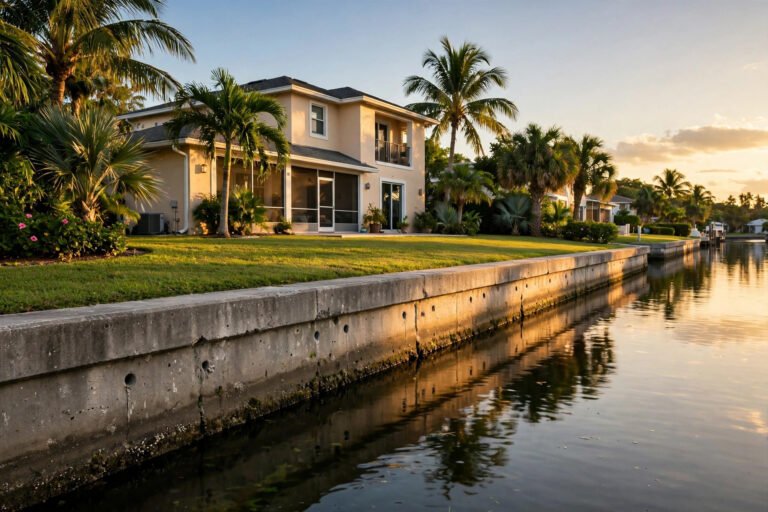
A concrete seawall is typically built from steel-reinforced precast panels set into the ground, sometimes with a poured-in-place cap and footer. It is the heavyweight option: rigid, massive, and capable of being built taller than vinyl, with some commercial and high-exposure residential walls running 10 to 20 feet in height.
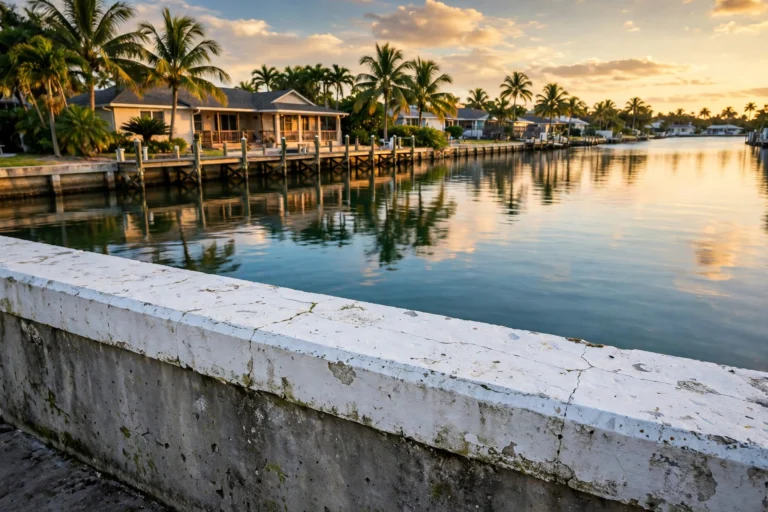
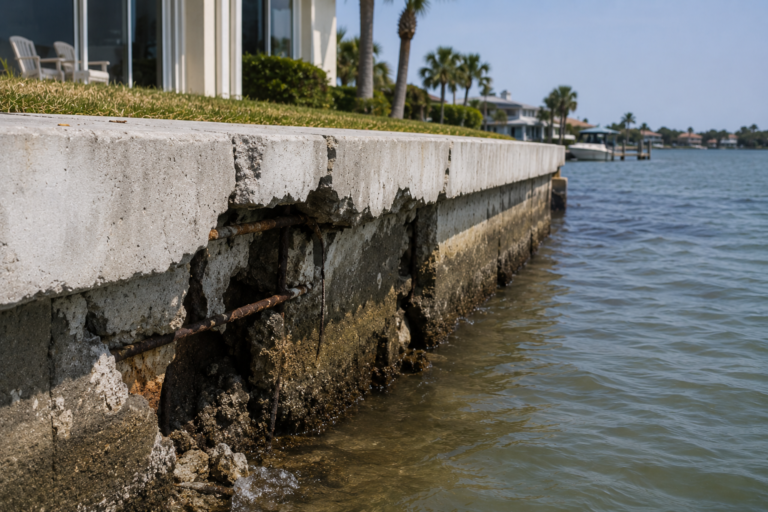
Concrete has protected Florida waterfronts for generations, and a well-built concrete wall is genuinely tough. The vulnerability is inside the wall. Steel rebar gives concrete its strength, but saltwater is relentless. If cracks develop or joints separate and saltwater reaches the rebar, the steel rusts, expands, and starts breaking the concrete apart from within. This is why concrete seawalls demand more vigilant maintenance than vinyl in our climate.
Installation is also a bigger production. Concrete panels are heavy, so the job needs larger pile-driving equipment, more staging area in your yard, and usually a longer construction window. For many Pinellas lots with tight access between houses, that logistics difference matters.
Cost Comparison: 2026 Tampa Bay Numbers
Let us talk real money, because this is where most homeowners start. Nationally, installed vinyl seawalls run roughly $200 to $550 per linear foot, while concrete seawalls run roughly $200 to $600 per linear foot. Those ranges overlap a lot, which surprises people.
Locally, the numbers run higher because of our labor market, permitting, and post-Helene demand. Recent Tampa Bay project data for 2026 puts vinyl sheet pile replacement around $480 to $820 per linear foot installed, and new concrete panel seawalls around $550 to $1,100 per linear foot. A simple cap refresh on an otherwise sound wall runs roughly $120 to $220 per foot.
For a typical 100-foot residential wall, that means you are generally looking at $48,000 to $82,000 for vinyl and $55,000 to $110,000 for concrete, before extras. If you are weighing repair against replacement, we break down seawall repair costs in Pinellas County in detail, because sometimes a targeted repair buys you years at a fraction of replacement cost.
What Pushes Your Quote Up or Down
Material is only one variable. Water depth at your shoreline, soil conditions, how equipment reaches your backyard, whether old wall sections must be demolished and hauled out, tieback and anchor requirements, and permit fees all move the final number. Any contractor who gives you a firm price over the phone without a site visit and a soils discussion is guessing. Real quotes come after someone stands on your property.
Lifespan in Florida Saltwater
This is where vinyl pulls ahead. A quality vinyl seawall in Florida saltwater is generally expected to last 50 to 60 years with minimal maintenance. It does not corrode, and there is no rebar inside waiting to rust.
Concrete seawalls are generally rated for 30 to 50 years, but that range comes with a big asterisk: the maintenance. A concrete wall that gets its cracks sealed, joints maintained, and drainage kept clear can absolutely reach the upper end. A neglected one in saltwater can start showing serious rebar-driven deterioration much sooner. When you see signs your seawall is failing like rust staining, spalling concrete, or leaning panels, the clock is already ticking.
Put simply: vinyl buys you a longer expected life with less effort, while concrete can last nearly as long if you stay on top of it. For most homeowners who would rather not think about their seawall for decades, that difference settles the debate.
Storm Performance After Helene
Hurricane Helene rewrote a lot of assumptions about seawalls in Pinellas County. Surge does not just push against a wall. It scours the toe at the base, saturates the soil behind it, and then yanks everything waterward as it recedes. The walls that failed worst were older walls with corroded tiebacks, undermined footers, or caps that had separated from the panels.
Neither vinyl nor concrete is storm-proof, and any contractor who promises that is selling something. But there are real differences. Concrete’s mass resists direct wave impact well, which matters on open-water exposures. Vinyl’s flexibility lets it absorb and release soil pressure without cracking, and because there is no steel skeleton to corrode, one of the most common hidden failure modes in older walls simply does not exist.
What matters more than material is engineering: proper tieback spacing and depth, filter fabric and drainage stone behind the wall so water pressure can relieve instead of building, a cap height matched to local surge history, and a footer protected against toe scour. Ask any contractor bidding your job to walk you through those four items specifically.
Maintenance: What Each One Asks of You
Vinyl is close to set-and-forget. Twice a year, walk the wall and look for displaced cap sections, clogged weep holes, and soil settling behind the wall. Keep drainage clear and you are mostly done. There is no painting, no sealing, no rust treatment.
Concrete asks for a real relationship. Inspect for hairline cracks and joint separation every year, because every crack is a potential path for saltwater to reach the rebar. Seal cracks promptly, keep the cap drainage working, and watch for rust staining, which is the telltale sign that internal steel is already corroding. Budget for periodic professional inspections, especially after major storms. Skip this maintenance and a concrete wall’s lifespan shortens dramatically.
Permits and Installation Differences
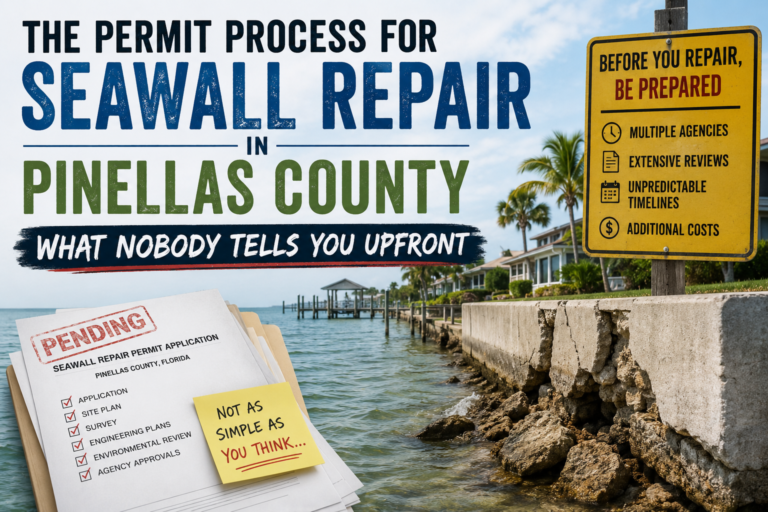
In Pinellas County, seawall work generally needs local permits, and depending on your location you may also be dealing with state or federal environmental review. Replacement projects face more scrutiny than in-kind repairs. Our walkthrough of the Pinellas County seawall permit process covers what to expect and how long it takes.
Installation-wise, vinyl usually means a faster, less disruptive job. The lighter panels go in with smaller equipment, which matters on tight lots in places like Treasure Island or Redington Beach where a crane barely fits. Concrete replacement is a heavier operation with bigger equipment, more noise, more yard disruption, and typically a longer timeline. If you are living in the home during construction, ask each bidder for a realistic day-by-day schedule.
Which One Protects Your Home’s Value Better
Here is what actually moves the needle with buyers and insurers: a permitted, engineer-designed wall in good condition with documentation. Material is secondary to that. A documented vinyl wall with a clean inspection report beats a mystery concrete wall of unknown age every time.
That said, appraisers and buyers in Pinellas County have noticed the shift. Vinyl with a concrete cap photographs well, reads as modern and low-maintenance in a listing, and comes with manufacturer warranties that transfer. Concrete still carries a perception of ultimate strength, which can matter for high-end open-water properties. Either way, keep every permit, engineering drawing, and contractor warranty in a folder. When you sell, that paperwork is worth real money.
How to Make the Call
Start with your shoreline, not the brochure. Calm canal or bayou with normal tidal range: vinyl is usually the smarter money. Open water with heavy boat wake or direct Gulf exposure: get an engineer involved and give concrete a serious look. Tight access lot: vinyl’s lighter installation may decide it for you.
Then interview at least three licensed marine contractors and ask each one the same questions. What does the soils report say about my lot? How are you handling tiebacks and drainage stone? What is the cap detail? What does the warranty actually cover, and what voids it? Who pulls the permits? The contractor who answers precisely and puts it in writing is the one you want, regardless of which material they recommend.
And do not wait until the wall is visibly failing to start this process. Permitting and contractor lead times in Pinellas County are measured in weeks to months, and every storm season you spend behind a compromised wall is a gamble with your yard, your foundation, and your insurance.
Talk to a Local Seawall Expert
If you are weighing vinyl against concrete for your Pinellas County waterfront home, talk to someone who has stood on hundreds of local shorelines before you spend a dollar. Call (727) 316-5675 for a straight answer about what your property actually needs. No pressure, no sales pitch, just local expertise.
A: As a rough range, vinyl sheet pile replacement runs about $480 to $820 per linear foot installed in the Tampa Bay area, while new concrete panel seawalls run about $550 to $1,100 per foot. Water depth, soil, access, demolition, and permits all move the final number, so get site-specific quotes.
Q: How long does a vinyl seawall last in Florida saltwater?
A: A quality vinyl seawall is generally expected to last 50 to 60 years in saltwater with minimal maintenance, because there is no steel inside to rust. Concrete seawalls typically last 30 to 50 years but need more diligent crack and joint maintenance to reach the upper end.
Q: Can you put a concrete cap on a vinyl seawall?
A: Yes, and it is the most common setup in Pinellas County. The concrete cap gives the vinyl wall a finished, walkable top edge while the vinyl panels below handle the saltwater exposure. Most new vinyl installations include the cap in the quote.
Q: Do I need a permit to replace my seawall in Pinellas County?
A: Generally yes. Seawall replacement typically requires local permits, and some locations trigger additional state or federal environmental review. Your contractor should handle permitting, and you should never start work without the permits in hand.