Seawall Cap Repair in Pinellas County: Costs and Warning Signs (2026 Guide)
Walk the back edge of your yard along the water and you will notice it first: the wide concrete ribbon along the top, a foot or two across, holding the whole structure together. That is the cap, and for most Pinellas County homeowners it is the first part of the seawall to cry for help. It cracks, it sinks, it rust-stains, and if you read those signals right you can often fix a cap for a fraction of what a full wall rebuild would cost.
Caps take the hardest beating of any part of your seawall. They sit in the saltwater splash zone, carry your fence and dock hardware, and anchor every tieback rod in the wall. A healthy cap holds the top of the wall true. A failing cap lets everything above the waterline loosen, shift, and wash out. Here is how to tell the difference, what seawall cap repair really costs here in 2026, and when a fresh cap buys you another decade.
What the Seawall Cap Actually Does
Think of the cap as the lid on the whole structure. A seawall is built from vertical panels or sheets driven into the earth, and left on their own those panels would flex and separate under soil pressure. The cap is the heavy concrete beam along the top that ties every panel into one continuous structure. On most residential walls around here it is roughly 12 to 24 inches wide and 8 to 12 inches thick, running the full length of the property.
The cap does three jobs that matter. First, it distributes load, so the push of the soil behind the wall is shared across every panel instead of bullying one weak one. Second, it anchors the tieback rods that keep the wall from leaning waterward; the rods thread into the cap and are locked down under it. Third, it is the surface you actually use: the walkway, the fence footing, the mounting point for cleats and dock brackets. That third job wears caps out fastest. Every fence post bolted through the concrete, every cleat yanking sideways when a boat swings, all of it lands on the cap.
The Warning Signs Your Cap Is Failing
Caps rarely fail overnight. They telegraph trouble for months or years, and homeowners who learn the signals save real money. If you are already watching for the signs your seawall is failing, start your next inspection walk at the top of the wall, because the cap shows its hand first.
Cracks That Run Along the Top of the Wall
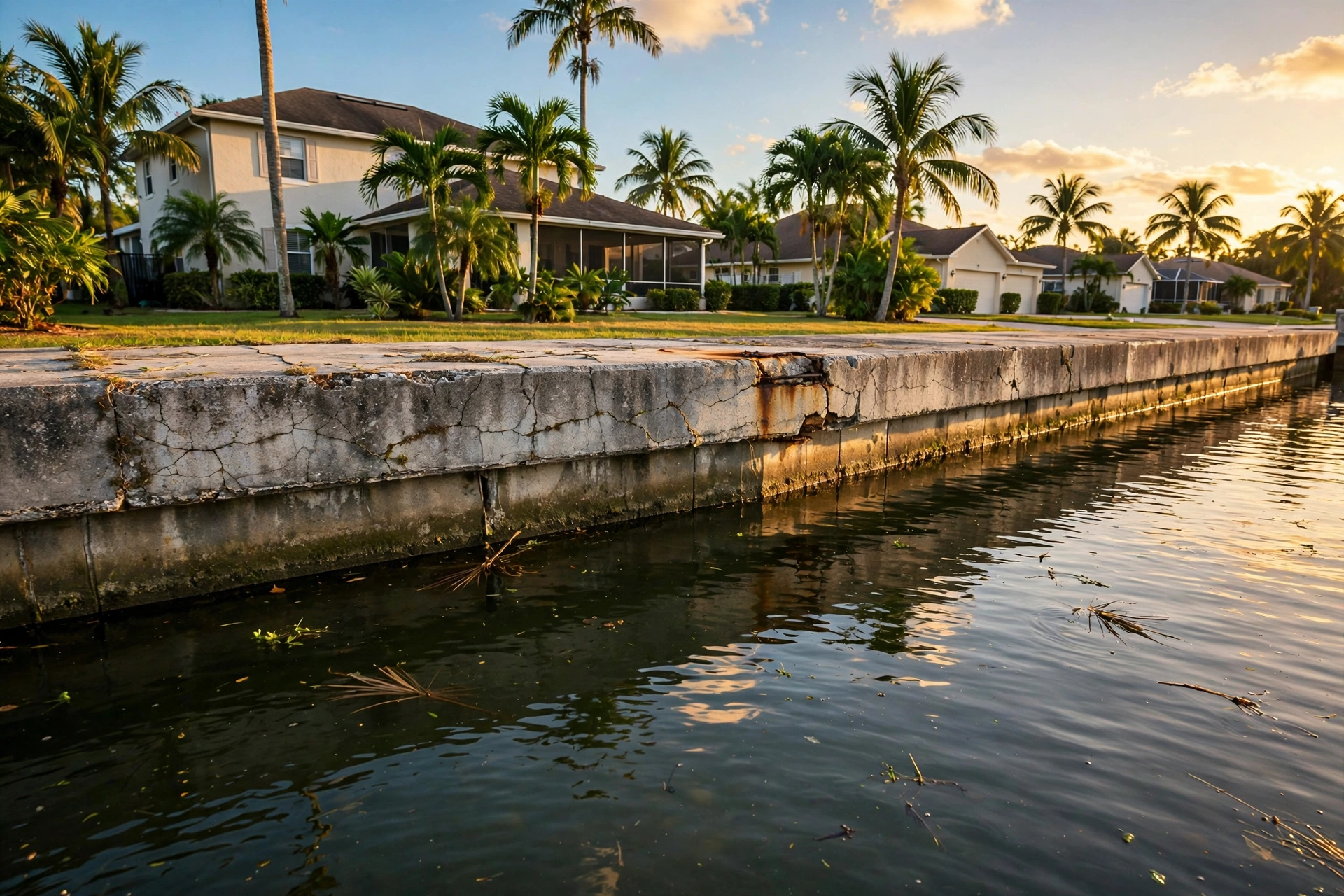
Not every crack is a crisis. Hairline shrinkage cracks appear on almost every concrete cap within a year or two of the pour, and a hairline that stays hairline is cosmetic. The cracks that matter are the ones that widen past an eighth of an inch, run several feet along the cap, or go all the way through the concrete so you can see dark soil or daylight at the bottom. Cracks that turn and head down into the face of the wall matter too, because they suggest the panel joint underneath is moving.
Watch cracks near fence posts and dock cleats, where loads concentrate: a crack radiating from bolted-on hardware means it is working the concrete loose. A crack tracking the tie rod line also means the anchor is moving.
Rust Stains and Exposed Metal
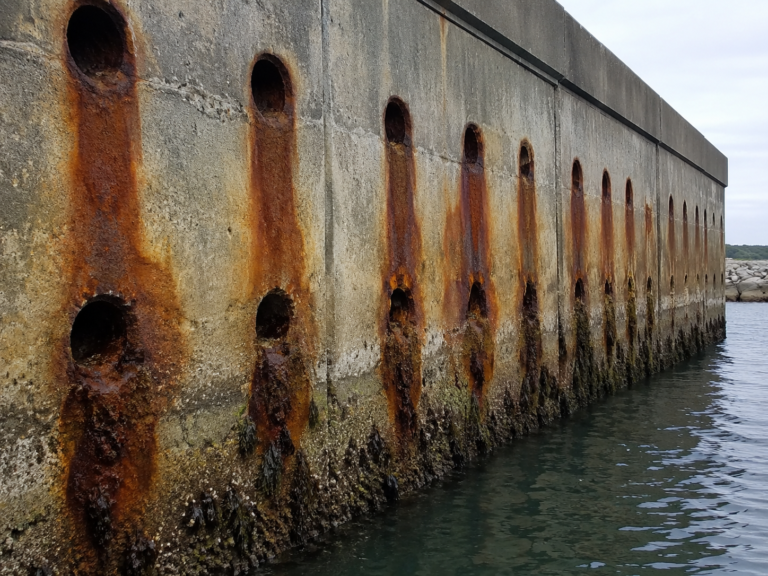
Orange or brown streaks bleeding down the face of the cap are the telltale sign of reinforcing steel corroding inside the concrete. Once saltwater reaches the rebar, the steel rusts and swells to several times its original size, and that expansion blows the concrete apart from the inside. It starts as a stain and ends as chunks of concrete falling into the water with rebar showing.
Exposed rebar on the underside degrades fastest because it stays wet longest, and stains below tie rods or fence bolts point at the hardware connections. Anywhere you can see or feel metal, get a contractor out within weeks, not years.
Uneven, Sunken, or Separated Sections
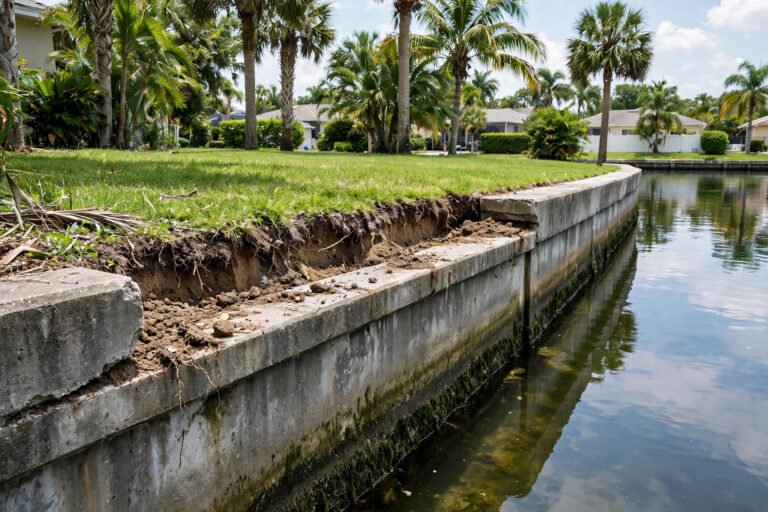
A healthy cap is level along its length. When sections sink lower than their neighbors, or you see a gap opening between the cap and the wall face below it, the soil behind the wall is moving. This is the most urgent cap symptom in Pinellas County, because our sandy soil washes out fast once water finds a path. A sunken cap section often pairs with a soft spot in the yard right behind the wall, and that combination means soil is leaving the property.
Separation between the cap and the panels below is a structural alarm: the cap keeps panels aligned, so a visibly shifted cap has stopped doing its main job. Walk the cap and feel for movement underfoot. A section that flexes when you stand on it is beyond patching.
Why Pinellas County Caps Fail Early
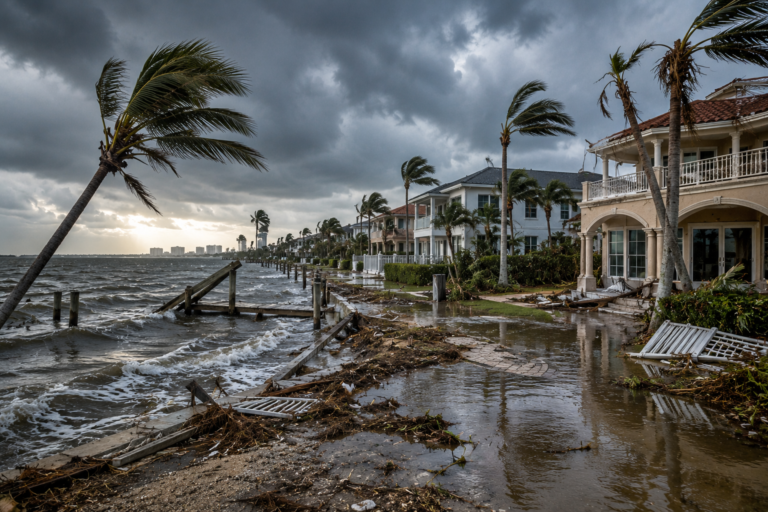
Geography and weather work against our caps harder than in most of Florida. We sit on barrier islands and low peninsula shorelines with sandy soil that saturates fast in a downpour and drops away fast when water escapes. The cap rides every cycle of that soil movement, and each one stresses the concrete a little more.
King tides are a second accelerant. Fall king tide season pushes saltwater high enough to lap and even overtop lower caps along the back bays, soaking the cap from the top down while wave action scours the toe below. Any cap already cracked is drinking saltwater with each high tide, and these fall tides can run a foot or more above normal.
The third factor is age. Much of the residential seawall inventory around Clearwater, Largo, Seminole, and the beach communities went in during the 1960s through 1980s building booms. Those caps are 40 to 60 years old, built with thinner concrete cover over the rebar than modern specs require, so salt reaches the steel faster.
Repair vs. Replacement: The Real Decision
A cap can be patched or resurfaced when the damage is limited to the concrete itself and the wall underneath is still sound. Hairline cracks, surface scaling, small spalls, with panels plumb and tiebacks holding: that is repair territory. A good patch job, properly sealed and drained, buys three to seven years on an otherwise healthy wall.
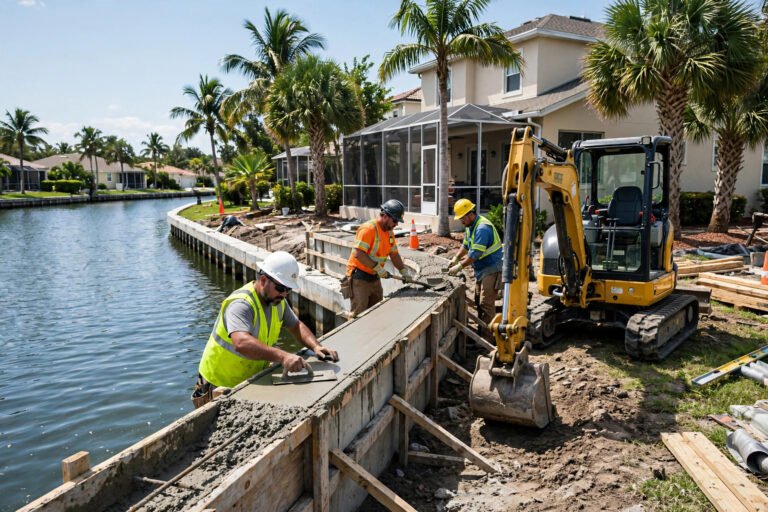
A cap needs full replacement, meaning the old beam is removed and a new reinforced one is poured, when the damage goes structural: through-cracks across the full thickness, separated or shifted sections, widespread rebar corrosion, or failed tie rod anchor heads. The good news is that a cap replacement on a sound wall is far cheaper and less disruptive than a rebuild. There is no dredging, no barge, no re-driving panels. Crews work from your yard: demolish the old cap in sections, inspect and repair the panel tops and anchor hardware underneath, re-anchor the tiebacks, and pour a new thicker cap with modern steel coverage. Most residential jobs finish in one to two weeks.
The bright line is what is happening behind and below the cap. Panels plumb, tiebacks holding, soil intact: the cap is an isolated problem and replacing it solves it. Leaning panels, failing tiebacks, heavy soil loss: a beautiful new cap is wasted money on a wall that needs a rebuild. A contractor who recommends cap replacement without inspecting the wall behind it is selling you half a job. For the economics, see our guide on what seawall repair costs in Pinellas County.
What Seawall Cap Repair Costs in Pinellas County in 2026
Treat these as verified ranges from Florida marine contractor pricing as of 2026, not quotes for your property. Targeted cap patching, crack injection, and spall repair typically run about $100 to $600 per linear foot, with cosmetic fixes at the low end and structural patching at the high end. Many Florida contractors quote simple cap repairs in the $3,000 to $8,000 range for a typical 60 to 80 foot residential wall.
Full cap replacement, where the old cap is demolished and a new reinforced cap is formed and poured, usually runs $15,000 to $40,000 for a typical residential wall, depending on length, thickness, hardware re-mounting, and whether tieback rods need re-anchoring. Compare that against a full wall rebuild at $80,000 to $250,000. Cap replacement buys the wall new life at roughly a fifth of a rebuild, provided the wall behind it is sound.
One cost factor that surprises homeowners is permitting. Simple patching and crack repair generally do not trigger a permit in Pinellas County municipalities, which keeps small jobs fast and cheap. Cap replacement, especially where tiebacks are disturbed or cap height changes, usually does, adding weeks of lead time. Two walls can look identical from the top and have completely different stories underneath.
When a New Cap Is Not Enough
The clearest case where cap work is the wrong call is a leaning wall. If the tiebacks have failed or the toe is undermined, a new cap does nothing about the forces that pushed the wall over. Pouring a perfect new cap on a leaning wall is like replacing the roof on a house with a failing foundation.
The second is heavy soil loss. If there are voids behind the wall large enough to swallow a garden hose, cap work should be paired with void filling, usually polyurethane injection, or the new cap settles into the same collapsing soil. The third is drainage failure. A cap is not a drainage device; if the weep holes are clogged and water is trapped behind the wall, hydrostatic pressure will attack the new cap from below just as it did the old one. Drainage and cap are a system. Treat them as one.
The rule of thumb Florida contractors use is simple. One failure mode isolated to the cap, on a wall that is otherwise straight and holding soil, points to cap replacement. Two or more failure modes across a meaningful length of wall point toward a full rebuild. Honest contractors will show you which one you have and price both.
Talk to a Local Seawall Expert
If your cap is showing any of the warning signs in this guide, the cheapest next step is a professional inspection. A local seawall expert can tell you in one visit whether you are looking at a patch, a cap replacement, or a bigger conversation about the wall itself. Call (727) 316-5675 or send a message through the form below.
Q: How much does seawall cap repair cost in Pinellas County?
A: Targeted cap patching typically runs $100 to $600 per linear foot, with many simple repairs landing in the $3,000 to $8,000 range for a residential wall. Full cap replacement usually costs $15,000 to $40,000. These are 2026 contractor pricing ranges, not quotes; your property’s length, access, and condition set the real number.
Q: Can a seawall cap be repaired without replacing the whole wall?
A: Yes, when the damage is limited to the cap and the wall behind it is sound. Plumb panels, holding tiebacks, and intact soil mean a cap replacement solves the problem at roughly a fifth of a rebuild’s cost. If the wall is leaning or losing soil, the cap alone will not fix it.
Q: How long does a seawall cap replacement take?
A: Most residential cap replacements take one to two weeks of on-site work, plus permit lead time. Crews remove the old cap in sections, inspect and repair the panel tops and anchor hardware underneath, form and pour the new reinforced cap, and re-mount your fence and dock hardware.
Q: Do I need a permit for seawall cap work in Pinellas County?
A: Simple crack patching and surface repairs generally do not require a permit. Cap replacement, especially where tiebacks are disturbed or the cap height changes, usually does. A licensed marine contractor will pull the permit and handle the paperwork as part of the job.