Seawall Repair vs Replacement in Pinellas County: How to Make the Right Call (2026 Guide)
If you are weighing seawall repair vs replacement in Pinellas County, you are asking the most expensive question a waterfront homeowner here ever answers. Every waterfront homeowner in Pinellas County hits this crossroads sooner or later. You notice a crack in the cap, a soft spot in the yard behind the wall, or a lean you swear was not there last summer. A contractor walks the wall and gives you two numbers: a repair number and a replacement number. The repair is cheaper today. The replacement is cheaper over a decade. Which one is actually right for your wall?
This is the most expensive question most waterfront owners around here ever answer, and it deserves better than a gut feeling. There is a real decision framework, and it comes down to structure, math, and a few things only Pinellas County throws at a wall. Here is how to think through it like the contractors do.
The One Question That Actually Decides It
Forget the price quotes for a minute. The decision is structural first and financial second. The single question is this: is the wall still doing its job of holding your soil out of the water?
If the damage is confined to the surface, the joints, or the cap, repair is almost always the right call. If soil is actively leaving your yard, panels are shifting, or the anchors that hold the wall upright have failed, repairs are a patch on a structure that has stopped working. Keep this filter in mind for everything below, because it is the same one every honest contractor uses.
When Repair Is the Right Call
Repair wins when the damage is isolated and the bones of the wall are sound. In these situations a targeted fix genuinely buys you years, often a decade or more, at a fraction of replacement cost.
The Damage Lives in the Cap or the Joints
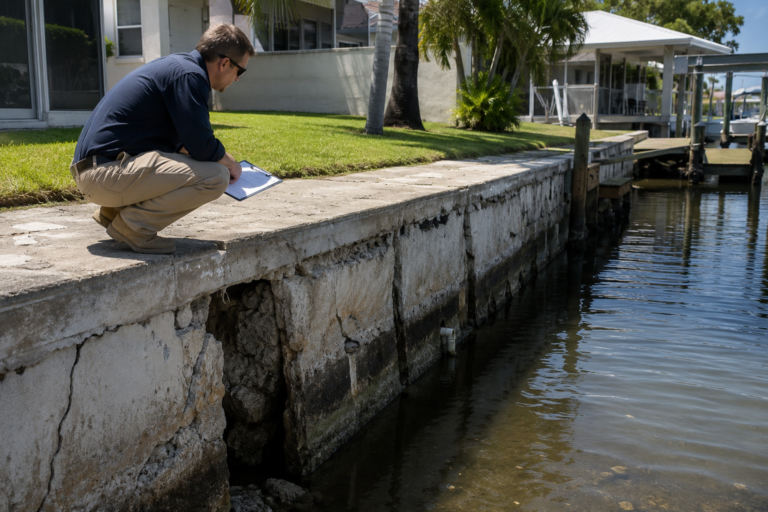
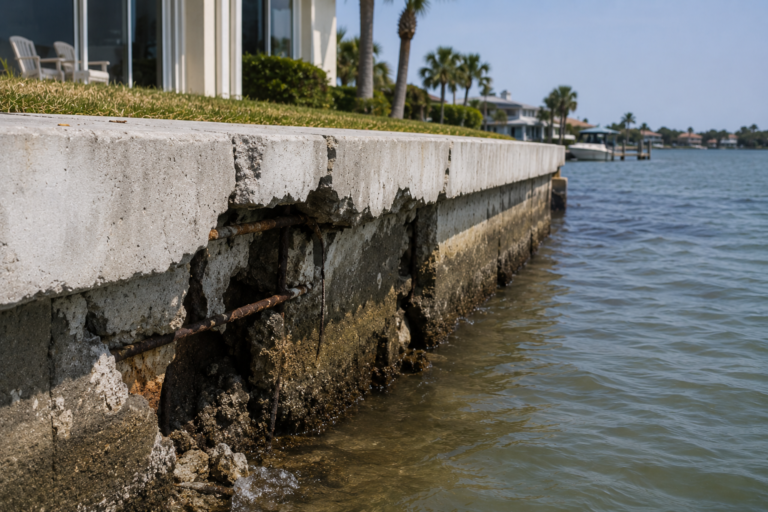
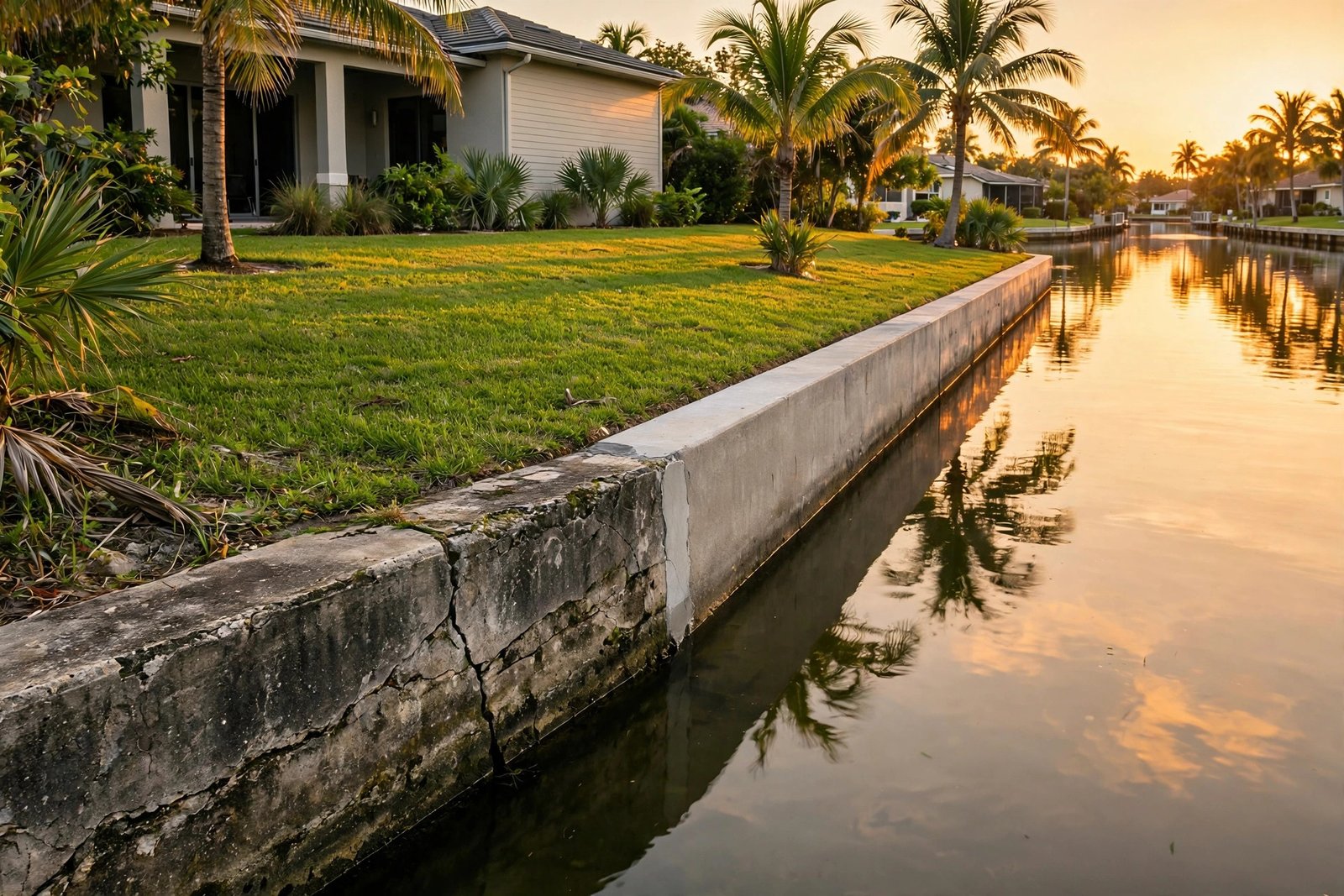
The cap is the concrete beam along the top of the wall, and it takes the worst beating of any part of the structure. Cracking, spalling, and surface scaling on the cap are common on walls that are otherwise perfectly healthy, and a cap restoration addresses the visible damage without touching the structure below. Joint separation between panels, grouted and sealed properly, falls in the same category. If you are already tracking the signs your seawall is failing, damage that stays above the waterline is encouraging news. It means the structure is intact and only its most exposed parts need attention.
Voids Behind the Wall Are Small and Fixable
This works when the voids are localized and the panels are still plumb. When voids keep reappearing in the same spots, water is moving soil out faster than any grout program can chase it. One grout job that holds is a repair. A second grout job in the same spot is a warning.
Drainage Is the Real Problem
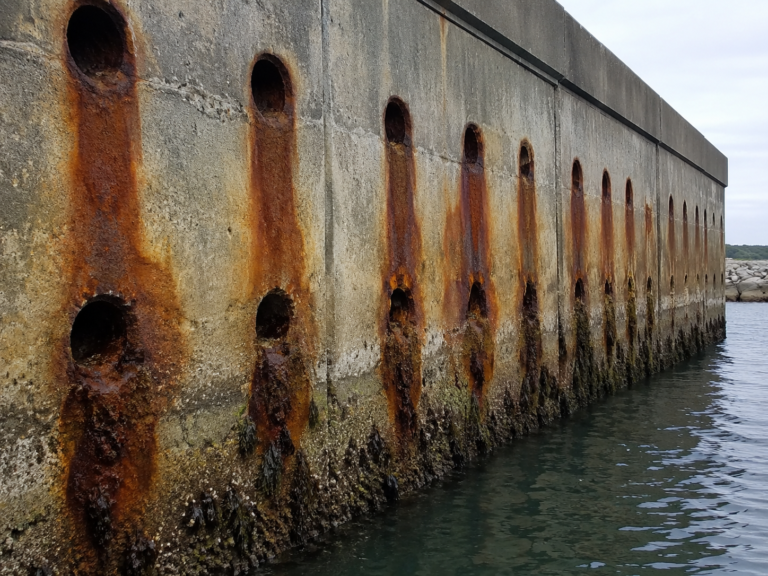
Some walls look like they are failing when they are really just drowning. When water cannot escape from behind the wall, pressure builds with every rainstorm and pushes soil through the joints. The fix is drainage, not demolition: weep holes, filter fabric, and a properly graded yard let water leave without taking your soil with it. We covered this in our guide to seawall weep holes, but the short version is that a wall with a drainage problem has a fixable problem.
The Wall Is Young and the Failure Is Isolated
Age changes the math dramatically. A wall built in the last 15 to 20 years with one bad section, storm damage to a run of panels or a tieback that corroded early, is a repair candidate. The rest of the structure still has decades of service life in it.
When Replacement Is the Smarter Call
Sometimes patching an old wall is just delaying the inevitable at full price. These failure modes tell you the structure itself is done.
The Wall Is Leaning or Bowing Waterward
A wall leaning toward the water has lost the fight against soil pressure, and the cause is almost always failed tiebacks. Those steel anchor rods hold the top of the wall back against the soil behind it, and in our salt-saturated ground they corrode faster than most homeowners expect. Once they snap, the lean only accelerates. When a whole run of wall is leaning, the anchoring system has failed as a system, and you cannot patch a system failure.
Soil Loss Keeps Returning
This is the tell that separates a fixable void from a dying wall: you repaired the soil loss, and it came back. That means water has a permanent path through the wall and is evacuating soil faster than repairs can replace it. Continuing to chase it with fill is pouring money into the bay. Replacement removes the failed structure that is letting the water through.
Panels Are Cracked Through or Displaced
Through-cracks, panels shifted vertically relative to their neighbors, and sections where you can see dark soil or daylight through the wall face all mean the structural section is compromised. The panel is no longer a barrier. Patching the visible crack does nothing for the structural failure underneath, and displaced panels cannot be nudged back into alignment. When multiple panels along a run look like this, the wall is finished.
The Wall Is Past Its Service Life
Age is not just a number for seawalls, it is a materials fact. Most residential concrete walls in Pinellas County deliver somewhere between 30 and 50 years of service, and we broke down the full picture in our guide to how long seawalls last in Pinellas County. A 50-year-old wall with any real symptoms is not a repair candidate. It is a wall that has given you everything it had.
The 50 Percent Rule: Doing the Math
Contractors here use a rule of thumb that has held up for years. When the cost of the needed repairs approaches half the cost of full replacement, replacement is usually the better capital decision.
The numbers as of 2026: targeted seawall repairs generally run in the low hundreds of dollars per linear foot, scaling with scope from simple cap work and joint sealing up to grout programs and tieback restoration. Full residential replacement on a typical Pinellas County canal lot generally lands between roughly $900 and $1,500 per linear foot, depending on material, water depth, access, and permitting. Your property’s numbers will vary, but the order of magnitude is what the rule needs.
Run it on a typical 100-foot wall. Suppose replacement would run around $110,000 and the needed repairs come in at $45,000. That repair is about 40 percent of replacement, close enough to the 50 percent line that replacement deserves serious thought. The reason is what you get per dollar. A patched wall in rough shape rarely buys more than 10 to 15 years, while an engineered replacement delivers 30 to 50. If the repair costs half as much but delivers a third of the life, it is the expensive option wearing a cheap disguise.
The rule cuts the other way too. A $15,000 repair on a wall that would cost $110,000 to replace is 14 percent, not a close call. That repair is cheap insurance on a structure with decades left. Run the ratio every time you get both quotes. It takes thirty seconds and clears the fog that sales pressure creates.
What a Seawall Repair Actually Involves
Most legitimate seawall repairs here fall into four categories. Cap restoration removes deteriorated concrete, treats or replaces corroded rebar, and pours a new cap. On a wall with sound panels and tiebacks underneath, a fresh cap is the single highest-value repair most homeowners ever buy.
Soil stabilization pumps grout through small holes to fill voids and densify loose soil behind the wall. Our 2026 guide to soil stabilization explains how contractors refill the voids behind a Pinellas County seawall without tearing out the wall. Tieback restoration replaces corroded anchor rods, more invasive, but it can add a decade of life to an otherwise sound wall. Joint sealing and panel patching stop the small leaks that, left alone, become soil loss. A good repair quote names the failure mode it is fixing and explains why the rest of the wall does not need the same treatment. A quote that cannot do that is a red flag. For a deeper look at the most common repair of all, see our breakdown of seawall cap repair costs and warning signs.
What a Seawall Replacement Actually Involves
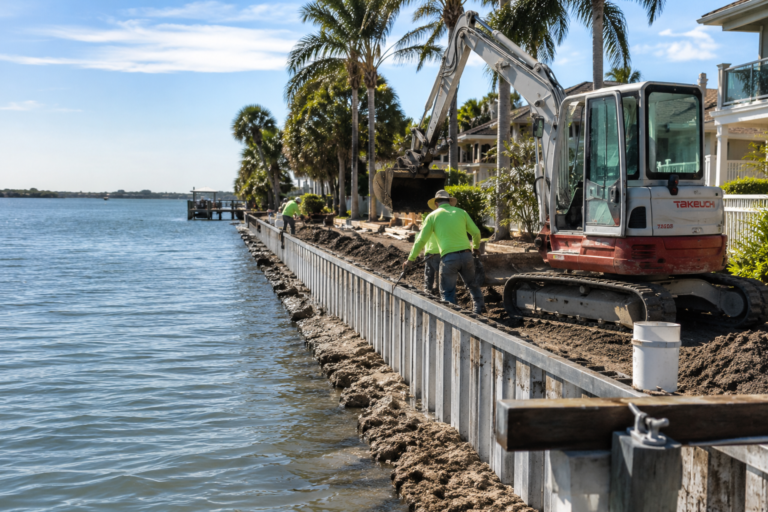
Replacement sounds dramatic, but on most residential jobs it is a well-understood process. In many cases the contractor installs a new wall directly in front of the old one, driving new sheet piling and pouring a new cap while the old wall stays buried as dead fill. You lose a foot or two of yard width to the new alignment, but the yard mostly survives.
Material choice is the big decision inside the replacement decision. Vinyl sheet piling dominates residential replacement around here: it never corrodes, installs fast, and costs less than concrete. Concrete panels with a poured cap remain the heavy-duty option for deep water and high exposure. We compared the two in our vinyl vs concrete seawall guide.
Permitting is the part that surprises people. Full replacement needs real permits, and in Pinellas County that means county review plus, on many waterways, state and sometimes federal sign-off. Local review typically takes weeks, but deeper environmental permits can stretch for months. This is the strongest argument for deciding early: a wall that fails while you are waiting on paperwork leaves you with an emergency, and emergencies always cost more.
Pinellas County Factors That Tip the Scale
Two local realities push the decision harder here than in most of Florida. First, our housing stock. Much of the residential seawall inventory in Clearwater, Largo, Seminole, and the beach communities went in during the building booms of the 1960s through the 1980s. Those walls are now 40 to 60 years old, which puts a huge share of them at or past the end of their service life at the same time. If your wall is from that era and showing real symptoms, the age argument for replacement is arithmetic, not theory.
Second, the water has been unkind lately. Hurricane season runs June through November, fall king tides push saltwater a foot or more above normal against back-bay walls, and Helene rewrote what everyone assumed about storm exposure on the Gulf side. When you evaluate your wall, evaluate the wall you have today, not the one you remember from five years ago.
How to Get a Straight Answer From a Contractor
The repair-or-replace question is where sales pressure lives, so go in with your own checklist. Ask every contractor the same four questions and compare the answers, not just the prices.
First: what is the specific failure mode, and show me. A good contractor walks the wall with you and points at the actual problem. A contractor who talks in generalities about your wall being old is selling, not diagnosing. Second: what will this repair not fix? Every repair has limits, and if the contractor cannot name them, they have not thought about it or hope you will not. Third: what is the realistic remaining life after the repair, and what does replacement buy me? You need both numbers to run the 50 percent rule honestly. Fourth: can I see the numbers for both options in writing? A contractor who will only quote one option is steering you. Get at least two quotes, and be suspicious of anyone who pressures you to sign the same day. The wall took years to get here. It can survive a week of comparison shopping. And for the full vetting checklist, see our guide on how to choose a seawall contractor in Pinellas County before you sign.
Talk to a Local Seawall Expert
Repair or replace is the biggest seawall decision you will make, and it is worth getting right. If your wall is showing its age along a Pinellas County canal or bay, talk to someone who looks at these walls every day before you spend a dollar. Call (727) 316-5675 for a straight answer on what your wall actually needs.
Q: How do I know if my seawall needs repair or full replacement?
A: Start with the structure, not the price. If the damage is limited to the cap, joints, or small voids and the panels and tiebacks are sound, repair is usually right. If the wall is leaning, panels are cracked through or displaced, tiebacks have failed, or soil loss keeps returning after repairs, replacement is the smarter call. When repair costs approach half of replacement cost, the 50 percent rule says replace.
Q: How much does seawall replacement cost in Pinellas County in 2026?
A: As of 2026, full residential replacement on a typical Pinellas County canal lot generally runs roughly $900 to $1,500 per linear foot, depending on material, water depth, access, and permitting. A standard 100-foot wall therefore lands in the low six figures. Targeted repairs run in the low hundreds per linear foot. Always get written quotes for both options before deciding.
Q: Can a seawall be repaired more than once, or is one repair the limit?
A: A wall can be repaired more than once, but repeated repairs in the same area are a warning sign. One grout program that holds for years is fine. The same voids reopening in the same sections means water has a permanent path through the wall, and at that point you are funding the bay, not fixing the wall. Two rounds of the same repair in the same spot usually means it is time to price replacement.
Q: How long does seawall replacement take, and do I need permits?
A: Construction itself typically takes a few weeks once crews mobilize, but permitting can add months in Pinellas County, since replacement often needs county review plus state or federal sign-off on some waterways. Contractors also book out months ahead. Decide early: a wall that fails while you are waiting on permits turns a planned project into an emergency, and emergencies always cost more.