Seawall Drainage in Pinellas County: French Drains, Weep Holes, and Keeping Water From Breaking Your Wall (2026 Guide)
Why Drainage Decides How Long Your Seawall Lasts
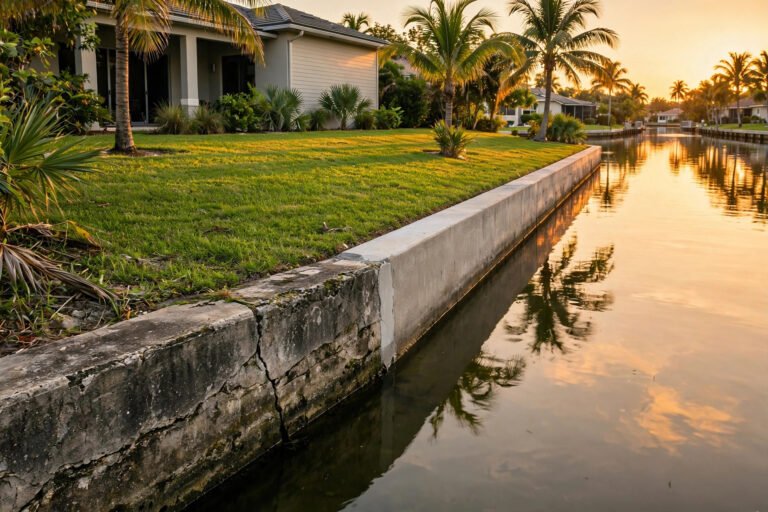
Stand in the backyard of a canal home in Pinellas County after a heavy summer rain and look at the ground behind the seawall. If the grass is squelchy underfoot, if water stands in a low strip along the cap, or if the soil has sunk into a shallow dip a few feet from the wall, your seawall has a drainage problem. The wall itself may look fine. The trouble is on the land side, where water is collecting and pressing against the back of the panels with every storm.
Most seawall failures in Pinellas County do not start at the water. They start behind the wall. Water that cannot drain away saturates the backfill, and saturated soil is far heavier than dry soil. That extra weight pushes the wall toward the canal, and it finds every joint, crack, and gap and carries sand and soil out with it. Over years, that slow washout leaves voids behind the wall, and a wall with nothing behind it is a wall waiting to lean, bow, or fail.
The good news is that drainage is the most fixable part of a seawall system. A wall with working weep holes, a proper French drain, and grading that sends roof water away from the cap can last decades longer than the same wall with clogged drains and a yard that funnels every downspout toward the water.
What Hydrostatic Pressure Does to a Seawall
Hydrostatic pressure is the force water exerts when it has nowhere to go. Behind a seawall, the ground holds water like a sponge after rain, and the water table in much of Pinellas County sits only a few feet below the surface. When the soil behind the wall is saturated and the canal on the other side is at low tide, the trapped water pushes outward with real force. It is the biggest load a seawall carries on a normal day, bigger than the waves lapping at its face.
A seawall is designed to let that pressure bleed off. Weep holes, joints between panels, and French drains all exist for the same reason: to give trapped water a controlled path out so pressure never builds to the point where it moves concrete. When those paths clog or were never built, pressure builds after every rain.
King tides and storm surge make it worse from the other direction. When the canal rises above the yard, water comes over the cap and saturates the backfill from the top. Then, as the tide falls, all that water has to drain back out through the wall. If it cannot, the wall carries a full load of trapped water while the canal side drops away. Our guide to seawall soil loss in Pinellas County explains what happens when trapped water starts carrying your yard into the canal.
The Three Ways Water Gets Behind Your Wall
Water reaches the back of a seawall from three directions, and most yards in Pinellas County deal with all three at once. Knowing which one is doing the damage tells you which fix actually helps.
Rain and Roof Runoff
A single inch of rain on a 2,000 square foot roof sends more than 1,200 gallons of water to the ground. If your downspouts discharge near the seawall, or if the yard slopes toward the water, a large share of that water ends up saturating the soil right behind the cap. Summer thunderstorms in Pinellas County routinely drop an inch or two in an afternoon.
Downspouts are the most common culprit and the easiest to fix. Walk your yard during a hard rain and watch where the water goes. If a downspout empties within a few feet of the cap, or if water sheets across the patio toward the wall, you have found a drainage problem that costs almost nothing to correct.
Groundwater and a High Water Table
Pinellas County is a low, flat peninsula, and the water table under most canal neighborhoods sits only a few feet down. After a wet summer, the ground behind a seawall can stay saturated for weeks even when it has not rained in days. This is the water you cannot see, and it is the reason drainage systems exist even for yards that look dry on the surface.
How Seawall Drainage Is Supposed to Work
A healthy seawall drains through several parts working together. None of them is complicated, and each one has a job that the others cannot do alone.
Weep Holes
Weep holes are small openings spaced along the panels near the waterline. They are the wall’s pressure relief valves. Water collecting behind the panels seeps through them and drips into the canal, keeping the pressure on both sides of the wall roughly equal. They clog easily with sand, soil, and marine growth, and a clogged weep hole is the same as no weep hole at all. Our guide to seawall weep holes in Pinellas County walks through how to check and clear them.
Check weep holes at low tide, when the most of the wall is visible. A working weep hole drips or runs after rain. A dry weep hole on a wet day is either clogged or buried behind backfill that has slumped against it. Clear them with a stiff brush or a gentle flush of water, never with a pressure washer aimed into the opening.
French Drains
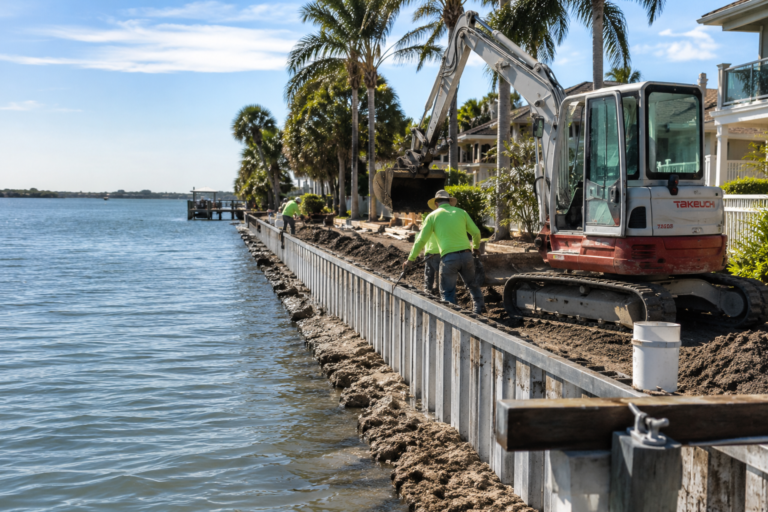
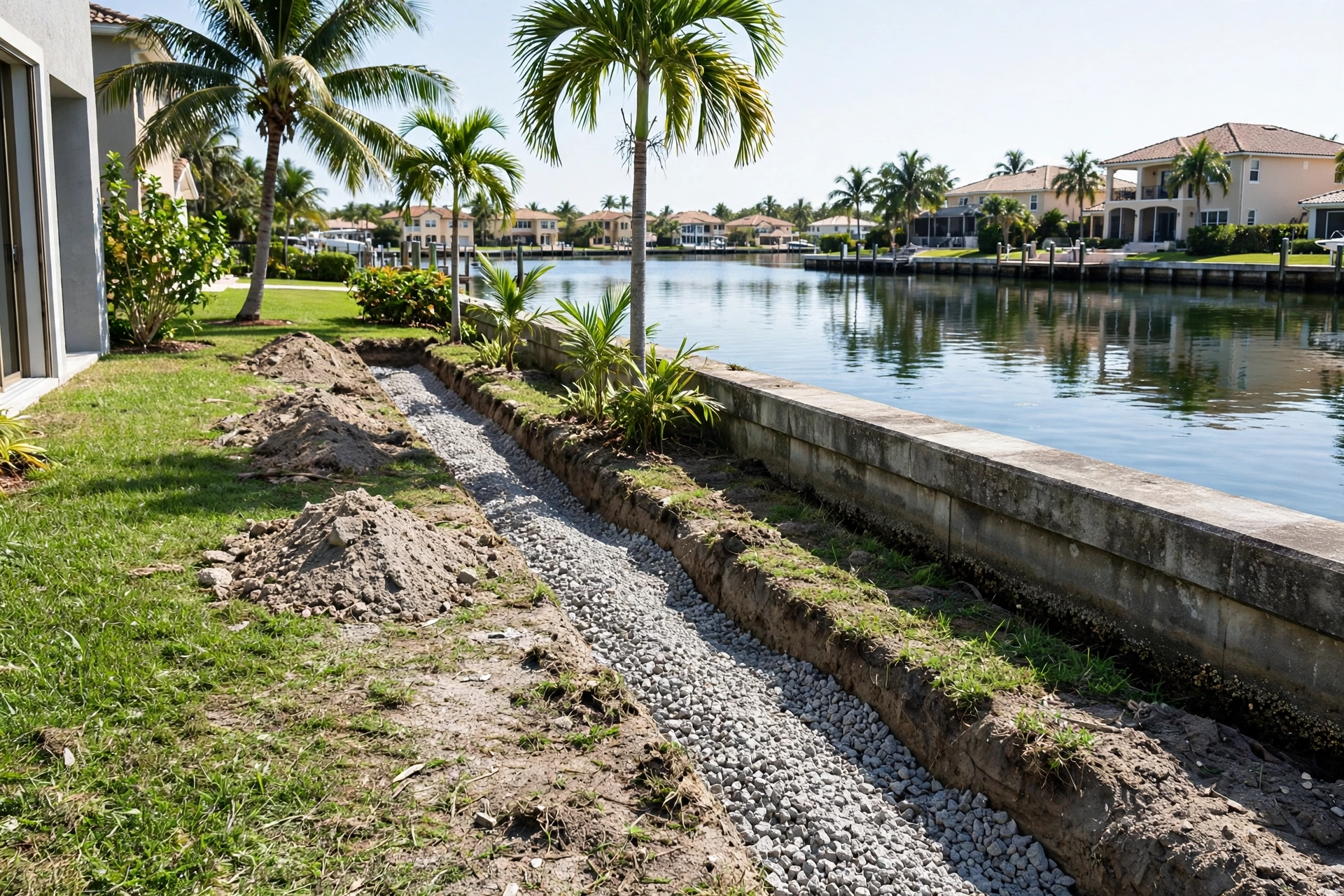
A French drain is a gravel filled trench with a perforated pipe inside it, buried behind the seawall parallel to the cap. Water in the saturated soil finds the gravel, drops into the pipe, and flows along it to an outlet, usually a weep hole, a storm drain, or a low spot where it can daylight.
Many older Pinellas County walls were built without one, and many newer ones have a drain that has failed. Filter fabric wrapped around the pipe breaks down over decades, gravel silts up, and roots grow into the pipe.
Grading and Surface Drainage
The cheapest drainage system is the shape of the yard itself. The ground behind a seawall should slope gently away from the cap, so rain runs toward the house or the street, not toward the water. In practice, years of settling do the opposite: the soil near the wall sinks as backfill compacts, and the yard develops a low trough right where you least want one.
Look at the strip of ground within six feet of the cap. If it holds puddles after rain while the rest of the yard drains, the grade has settled. Topping it up with clean fill and compacting it restores the slope.
Signs Your Seawall Drainage Is Failing
Standing Water and Soggy Ground
If the ground behind the wall is soft and wet days after rain, while the front yard is dry, water is trapped behind the panels. The same goes for a strip of dead or yellowing grass along the cap, which often means the soil there stays saturated.
Sinkholes and Soil Loss
A dip or sinkhole in the yard within a few feet of the wall means soil has already left through the wall or under it. Larger holes, or a paver patio that has settled toward the water, mean the void behind the wall has grown. At low tide, look for mounds of sand or soil in the water just outside the wall. That is your backfill, and it is leaving because water is carrying it through gaps the drainage system should have protected.
Cracks and Leaning Panels
When drainage fails long enough, the wall itself starts to show it. Panels bow outward under the weight of saturated soil, cracks widen after rainy spells, and the cap line steps up or down at a joint where one section has shifted. Our seawall inspection checklist for Pinellas County homeowners walks through a full set of checks so you can judge the whole wall instead of one symptom. Any crack that leaks water carrying sand, or any panel that has moved, needs a professional inspection promptly.
What a French Drain Behind a Seawall Costs in Pinellas County in 2026
Costs vary with wall length, access, and how much digging the job needs, so treat every number here as a planning range as of 2026, not a quote. A straightforward French drain installed behind a seawall in Southwest Florida typically runs $25 to $50 per linear foot. A short run of 30 to 40 feet behind one section of wall commonly totals $3,500 to $5,000, and a full length system along a 100 foot wall commonly runs $5,000 to $15,000.
Flat yards are the catch in Pinellas County. A French drain only works if the pipe slopes steadily toward its outlet, and in a yard that is barely above sea level, finding that slope can be hard. When gravity cannot do the job, the system needs a sump pump to lift the water to the outlet, which adds roughly $3,000 for the pump and electrical work.
Compare that with what poor drainage costs. A single leaning panel replacement commonly runs $5,000 to $25,000, and a full wall replacement runs about $450 to $700 per linear foot. A $5,000 drain that keeps a wall standing for another twenty years is the cheapest seawall work you will ever buy. Get three written quotes for the same scope.
What You Can Do This Week
Walk the wall at low tide and confirm every weep hole is open and dripping after rain. Follow each downspout and make sure none of them discharges within a few feet of the cap. Look at the ground within six feet of the wall and note any low spots or dips. Check that sprinkler heads near the wall are aimed at the lawn, not at the backfill. These four checks take half an hour, and they catch most drainage problems while they are still cheap.
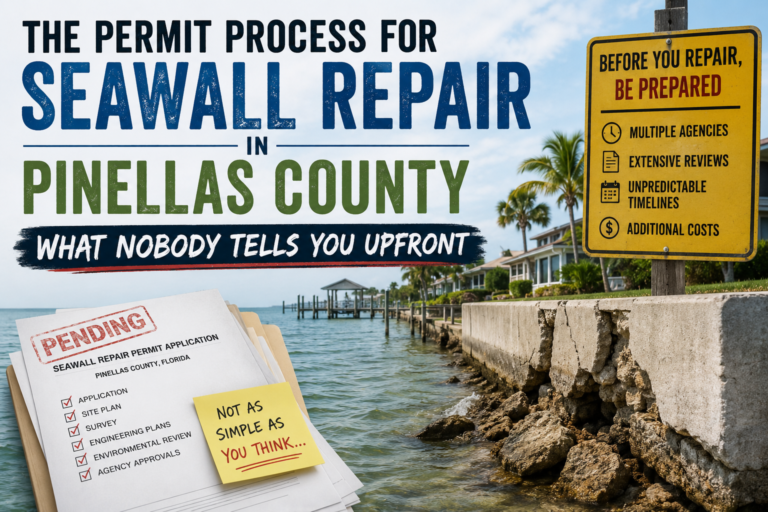
When Drainage Work Needs a Permit
Simple maintenance, like clearing weep holes or regrading a low spot, does not need a permit. Bigger work usually does. Installing a new French drain behind a seawall, rebuilding one, or connecting a drain to a municipal storm system generally requires a permit from your city. Check with your city’s building department before the work starts, and make sure your contractor pulls the permit rather than asking you to.
Talk to a Local Seawall Expert
If water is standing behind your seawall, or the ground along the cap is sinking, talk to someone who looks at Pinellas County walls every week. Call (727) 316-5675 for a straight answer about what your drainage problem means and what the fix costs. A short conversation now beats a leaning wall later.
Q: What is seawall drainage and why does it matter?
A: Seawall drainage is the system that lets water escape from behind the wall, through weep holes, French drains, and grading, so pressure never builds against the panels. Without it, saturated soil pushes the wall toward the canal and carries backfill out through joints and cracks.
Q: How do I know if my seawall drainage is failing?
A: Look for standing water or soggy ground behind the wall days after rain, dips or sinkholes near the cap, soil washing into the canal at low tide, and weep holes that stay dry on a wet day.
Q: How much does a French drain behind a seawall cost in Pinellas County?
A: As of 2026, a straightforward French drain typically runs $25 to $50 per linear foot. A short run commonly totals $3,500 to $5,000, and a full length system with a sump pump can run $9,000 to $15,000.
Q: Do I need a permit to install a French drain behind my seawall?
A: Usually yes for new or rebuilt drainage that touches the seawall or connects to a municipal storm system. Simple maintenance like clearing weep holes or regrading a low spot does not need one. Check with your city’s building department first.