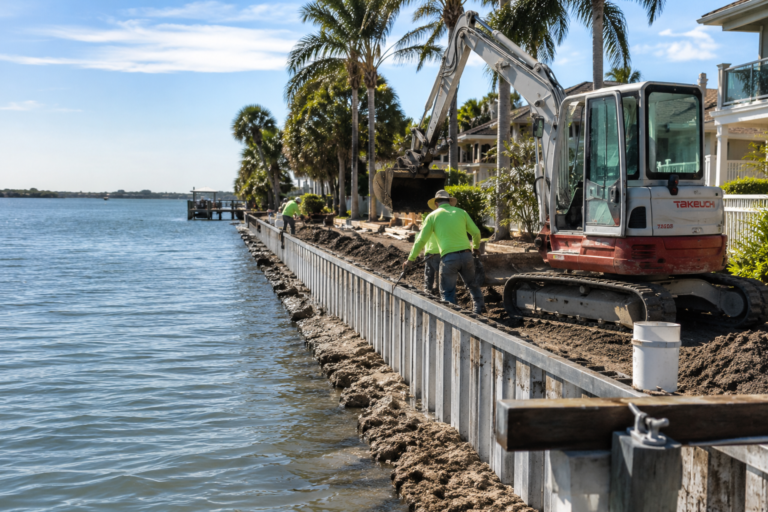
Seawall Maintenance in Pinellas County: A Year-Round Guide for Waterfront Homeowners (2026)
Why Seawall Maintenance Matters in Pinellas County
A seawall is the hardest working structure on a waterfront lot in Pinellas County, and it is also the easiest one to forget. It stands in saltwater every day of the year, takes boat wakes on the canals of Treasure Island and Indian Shores, and holds back the soil under your yard. That silence is the trap. By the time a seawall looks like it needs help, the problem behind it is usually months or years old, and the repair bill has grown with it.
Seawall maintenance is the habit that keeps small problems small. Most of it is a few walks along the wall each year, a hose, a stiff brush, and knowing which small changes are worth a phone call. The walls that last 40 or 50 years in Pinellas County almost always belong to owners who paid attention.
What a Year of Seawall Maintenance Looks Like
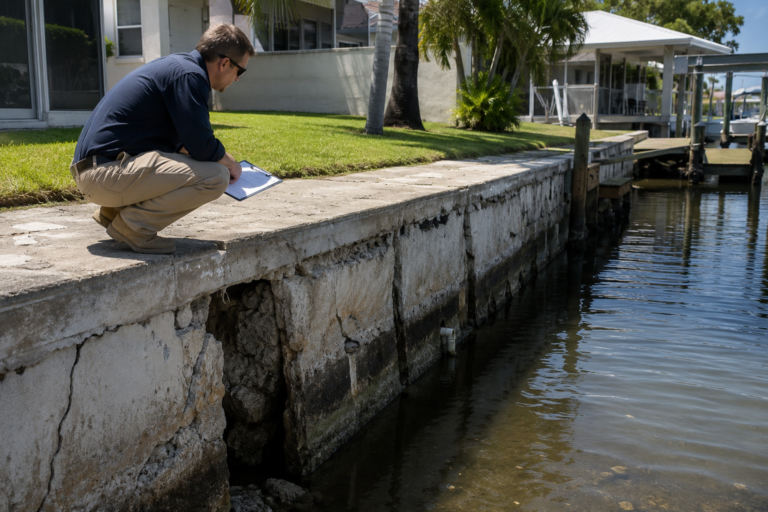
Think of it as twice a year, plus a quick look after every big storm. Walk the wall once in late spring, before hurricane season, and once in late fall, after the season and the fall king tides have passed. Each walk takes less than half an hour on a typical residential lot, and it is best done at low tide, when the base of the wall and the waterline are visible.
On each walk, check the same handful of things: the cap along the top, the joints between panels, the weep holes, the soil behind the wall, and the bottom of the wall where it meets the water. You are looking for change, not perfection. A crack that was not there in spring, a soft spot that has grown since fall, or a weep hole that has gone quiet are all worth noting. Take a phone photo each time so you can compare year to year.
Weep Holes: The Small Openings That Do the Heavy Lifting
If your seawall has only one maintenance item you never skip, it is the weep holes. These small openings let groundwater drain out from behind the panels, relieving the pressure that builds up every time it rains or the tide rises. When they clog with sand, soil, or marine growth, that pressure has nowhere to go. It pushes on the panels, forces water through the joints, and over time it can crack concrete or push a wall out of line.
Clearing weep holes is a homeowner job. At low tide, look at each opening. A working weep hole weeps: after a rain you should see a slow trickle or at least dampness around it. If an opening is dry right after a storm, or packed solid with sand and debris, clear it gently with a flexible rod or a low pressure jet from a garden hose. Never force a metal rod through with real effort, because you can damage the filter fabric behind the opening. For the full picture of how these openings work, read our guide to seawall weep holes in Pinellas County.
The Cap: Your Wall’s First Line of Defense
The concrete cap along the top of your seawall does more than give you a place to walk. It ties the panels together, sheds rainwater away from the wall face, and keeps water from pouring straight down behind the panels. When the cap cracks, chips, or separates from the wall, water finds the gap and starts working on the steel inside and the soil behind.
Hose the cap down a few times a year to wash off salt, sand, and algae. Salt left sitting on concrete pulls moisture in and speeds up corrosion of the steel reinforcement inside, which is the same corrosion that eventually shows up as rust stains and long cracks. A stiff brush and fresh water are enough. A pressure washer can be used, but keep it on a wide fan and a modest setting.
Look for hairline cracks along the cap and note their direction. Small surface cracks from shrinkage are common and usually cosmetic, but a crack wide enough to fit a fingernail, a crack that runs the length of the cap, or rust staining along a crack all deserve a closer look. Sealing small cracks with a marine grade epoxy, and applying a penetrating concrete sealer every three to five years, slows the salt intrusion that causes the worst cap damage. For a deeper look at cap problems and fixes, see our guide to seawall cap repair in Pinellas County.
Joints and Seams: Where Soil Escapes
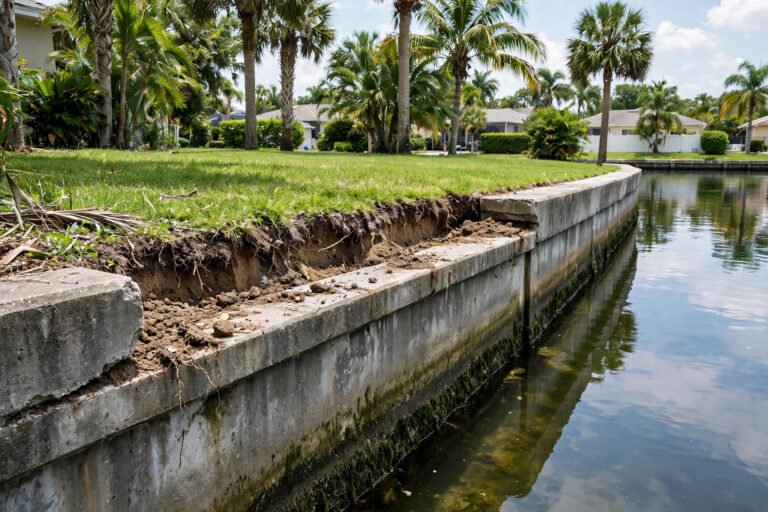
Most Pinellas County seawalls are built from panels, and the joints between them are the most common place for soil to escape. On your low tide walk, look closely at each vertical joint. You want a tight, even seam. What you do not want is a gap you can see daylight through, a joint packed with sand that has washed out from behind the wall, or a small mound of soil sitting in the water right in front of a joint. That mound is backfill that has left your yard through the seam.
Small gaps can sometimes be sealed by a contractor with a flexible marine sealant or a foam injection behind the joint, plus a filter fabric or cover plate over the seam. That is a professional job, not a tube of caulk from the hardware store, because the seal has to flex with the wall and survive saltwater. What you can do is catch the gap early, while it is still a small repair. If several joints are leaking at once, or the yard keeps settling no matter how much fill you add, the wall needs a professional assessment. Our guide to soil loss behind a seawall explains how to tell normal settling from a wall that is losing its backfill.
Cleaning the Wall Face: Salt, Algae, and Barnacles
The water side of a seawall grows things. Algae, barnacles, and salt crust build up on the concrete, and while a little growth is normal, a thick mat traps moisture against the surface and hides the cracks and spalling underneath. Once a year, at a low spring tide, scrub the exposed face above the waterline with a stiff brush and fresh water. You are not trying to make it look new. You are trying to see it clearly.
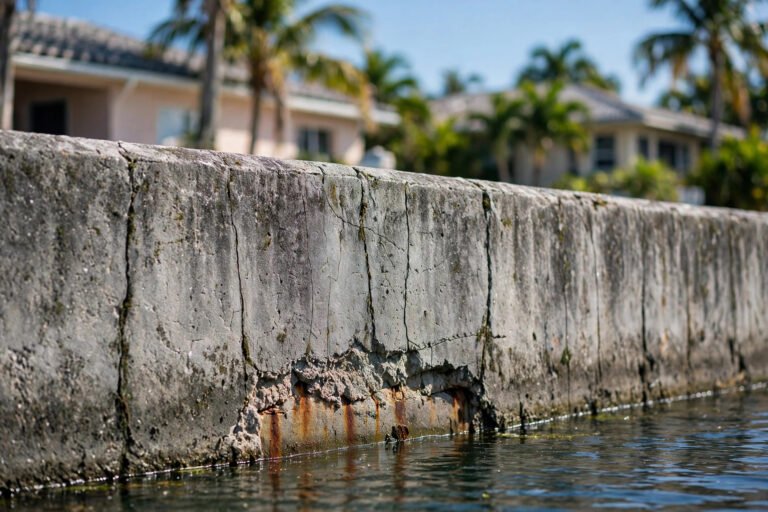
While you clean, watch for spalling, which is concrete flaking away in patches, and for rust stains running down the face. Spalling usually means the steel inside is corroding and expanding, pushing the concrete off in flakes. A few small patches on an old wall are common, but patches that grow year to year, or rust stains in new places, are signs the wall is aging faster than its maintenance can keep up with. Do not use bleach or harsh chemicals on the wall face. The runoff goes straight into the canal or bay.
Drainage Behind the Wall: French Drains and Grading
Most of the water that threatens a seawall comes from behind it, not in front of it. Rain on your yard, runoff from your roof, and sprinklers watering the strip right behind the cap all send water down behind the panels. A healthy wall handles it through a French drain, a gravel filled trench with a perforated pipe running along the back of the wall, and the weep holes that let the water out.
Keep that system working by managing the grade. The ground behind the cap should sit level with the top of the cap or slope gently away from the water, so rain runs across the cap and into the yard, not straight down behind the wall. If the soil behind the cap has settled lower than the cap, water ponds there and drains behind the panels. Top it up with clean fill and re-sod the strip. It is a small job, and one of the highest value maintenance tasks on this list.
Check your downspouts and sprinklers too. A downspout that empties right behind the seawall pours roof water into the backfill every time it rains, and a sprinkler head aimed at the strip behind the cap does the same thing all summer. Redirect both so they water the yard, not the wall.
Vegetation, Docks, and the Yard Behind the Wall
Plants near a seawall are a mixed blessing. Grass growing slightly over the cap helps water run over the top instead of behind the wall, which is exactly what you want. But shrubs and trees planted tight against the wall are a problem. Roots work into joints and cracks and widen them as they grow, and a big tree close to the wall can push on the panels as it matures. Keep woody plants a few feet back from the cap.
If you have a dock or a boat lift near the wall, give it the same twice a year look: check the pilings and the hardware where the dock meets the wall, and watch for a dock pulling away from its connection. A dock that shifts in a storm can lever against the wall and crack the cap, so tighten loose hardware promptly and do not hang heavy loads directly from the cap. Ask crews doing yard work to keep heavy vehicles back from the edge, too, since a loaded truck parked right behind the cap pushes the wall waterward.
After the Storm: Post Hurricane and King Tide Checks
Pinellas County gets a full hurricane season every year, plus fall king tides that push water higher than normal for days at a time. After any named storm or king tide that overtopped your wall, do a focused walk within a few days. Look for new cracks in the cap, fresh soil mounds in front of the joints at low tide, new soft spots or dips in the yard, and any place where the wall has shifted or leaned even slightly.
King tides deserve special attention because they are quiet. They push saltwater over the cap and behind the wall for several days running, and they leave salt and silt in the backfill. After a king tide cycle, hose the cap and the strip behind it with fresh water, clear the weep holes, and check the grade behind the cap. If a storm leaves your wall visibly leaning, bowing, or missing panels, do not wait for the next scheduled walk. Call a licensed marine contractor right away.
What to Leave to a Professional
Good seawall maintenance has a clear line between homeowner work and contractor work. You can clean, clear weep holes, hose the cap, top up settled soil, redirect a downspout, and trim vegetation. Leave the rest to a licensed marine contractor: sealing or injecting joints, repairing the cap, replacing tiebacks, adding riprap at the toe, installing or rebuilding a French drain, and anything that involves digging behind the wall or working below the waterline.
Most marine contractors in Pinellas County recommend a professional inspection every one to two years, and every year if the wall is older than twenty years, has had repairs before, or faces heavy boat traffic. That inspection is a second set of trained eyes on the parts of the wall you cannot see, especially below the waterline. Pair your own routine with that visit, and a concrete wall in our climate can reasonably be expected to last thirty to fifty years. Without either one, that number drops fast.
A Simple Maintenance Calendar for Pinellas County Walls
Put the routine on the calendar and it will actually happen. In late spring, before hurricane season, do the full low tide walk: clear the weep holes, scrub the wall face, check the cap and joints, and confirm the grade behind the cap. In summer, keep the weep holes clear after heavy rains and the sprinklers off the strip behind the wall. In fall, after hurricane season and the king tides, repeat the full walk and hose salt off the cap. In winter, schedule the professional inspection and any contractor work the year turned up, because marine contractors are easier to book before the spring rush.
That is the whole program: four seasons, two full walks, a few afternoons of simple work, and one professional visit every year or two. In a county where a full seawall replacement can run into five figures, the cheapest seawall you will ever own is the one you already have, maintained well.
Talk to a Local Seawall Expert
If your twice a year walk turned up something you are unsure about, a crack that is growing, a weep hole that stays clogged, or soil that keeps disappearing behind the wall, talk to someone who works on Pinellas County walls every week. Call (727) 316-5675 for a straight answer about what you are seeing and whether it is a homeowner fix or a contractor job. A quick conversation now can save you a leaning wall later.
Q: How often should I maintain my seawall in Pinellas County?
A: Walk your wall at least twice a year, once in late spring before hurricane season and once in late fall after the season and the fall king tides. Clear the weep holes on each walk, and do a quick check after any named storm or king tide that overtops the wall. A professional inspection is recommended every one to two years.
Q: What is the most important seawall maintenance task?
A: Keeping the weep holes clear. They relieve the water pressure that builds up behind the wall, and when they clog, that pressure cracks concrete, forces soil through the joints, and can push a wall out of line. Clearing them with a flexible rod or a gentle hose jet twice a year is the highest value job on the list.
Q: Can I pressure wash my seawall?
A: Yes, but use a wide fan nozzle and a modest setting, and stick to fresh water and a stiff brush for most of the work. A hard jet held close will chew into the concrete surface and open pores for salt to settle into. Never use bleach or harsh chemicals on the wall face, since the runoff goes straight into the canal or bay.
Q: How long will my seawall last with regular maintenance?
A: As of 2026, a well built concrete seawall in Pinellas County can reasonably be expected to last 30 to 50 years with regular maintenance and professional inspections. Without maintenance, saltwater, poor drainage, and unchecked soil loss can cut that life substantially. Vinyl and steel walls have their own ranges, and all of them last longer when the drainage and the cap are kept up.