Seawall Riprap in Pinellas County: Toe Rock That Protects Your Wall (2026 Guide)
What Riprap Does for a Seawall
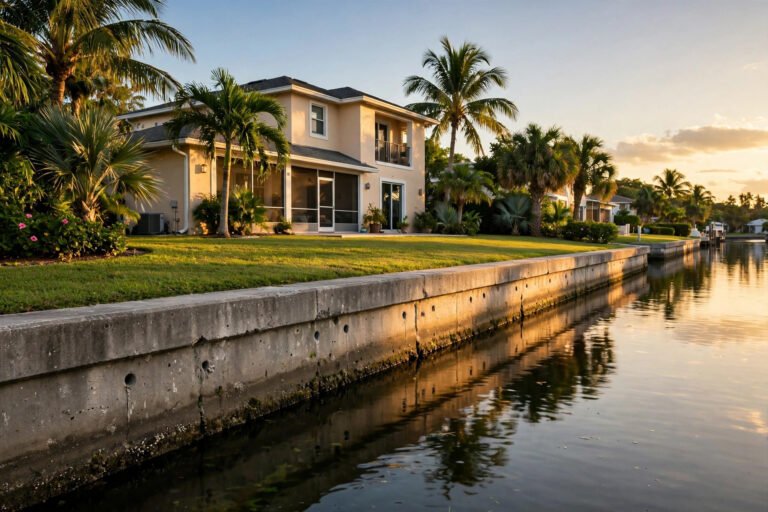
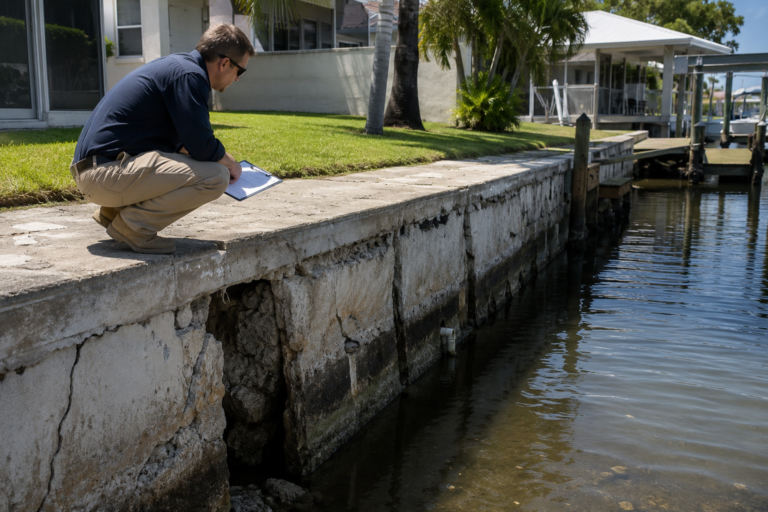
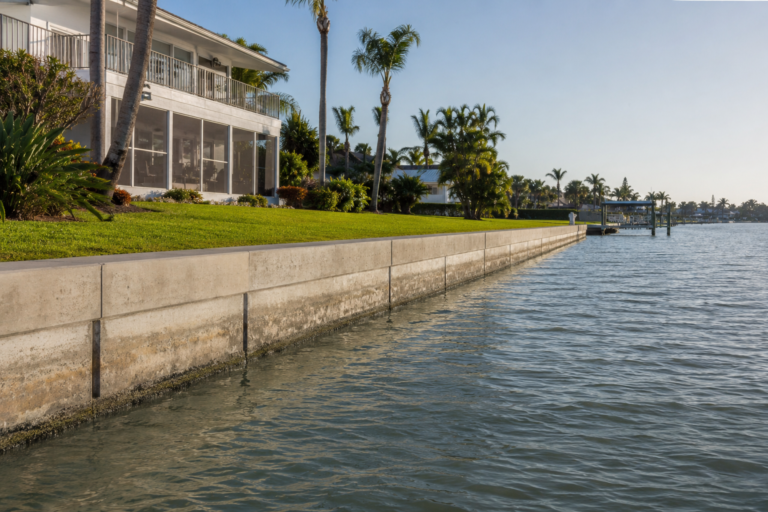
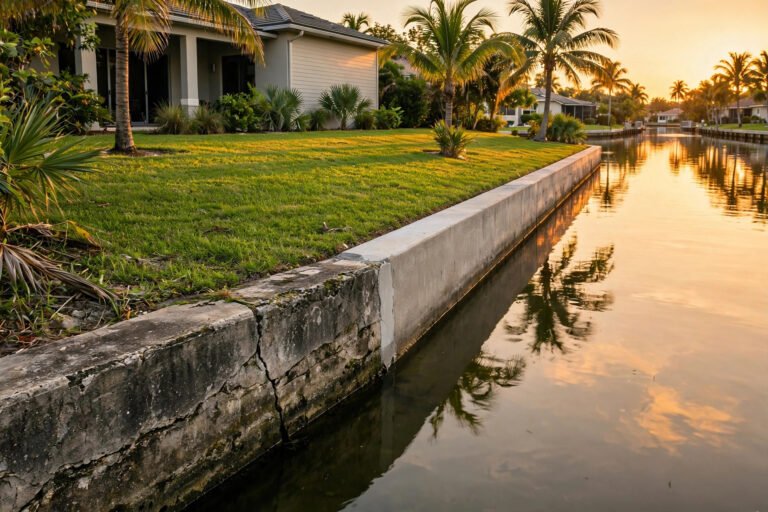
Stand on a Pinellas County canal at low tide and look at the base of a seawall. On a healthy wall, the mud or sand in front of the panels sits roughly level, and the bottom of the wall disappears into it. On a wall that is starting to struggle, you will see something different. The water has scooped a hollow along the base, the lower panels are exposed, and in bad cases you can see daylight under the toe of the wall. That hollow is called scour, and it is one of the quietest ways a seawall loses its footing.
Riprap is the fix for that problem. It is a sloping pile of large rock placed against the water side of a seawall, right at the toe where the wall meets the bottom. The rock does two jobs at once. It breaks up wave energy before the waves can hit the wall face, and it armors the bottom so currents and boat wakes cannot keep digging at the base.
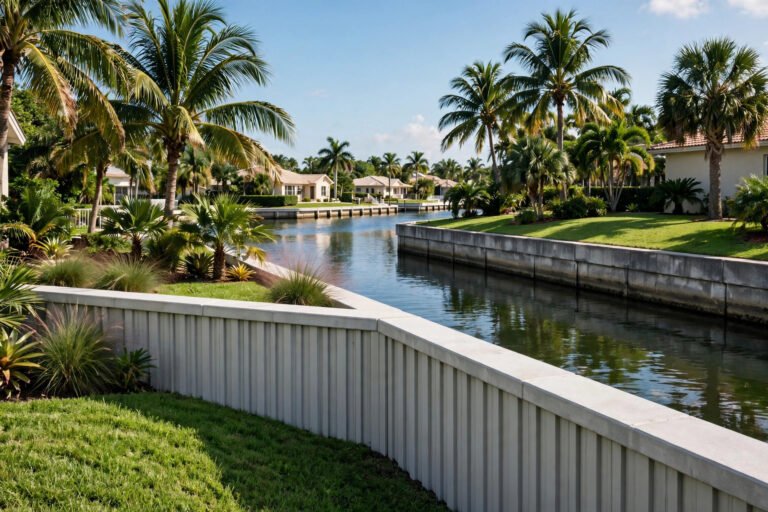
Homeowners along Boca Ciega Bay, the Treasure Island canals, and the Gulf beaches of Pinellas County deal with more wave action than most people realize. Even a canal wall gets a daily workout from passing boats, and every wake that slaps the wall also tugs at the sand in front of it. Over years, that tugging adds up. Toe rock is often the difference between a wall that holds its ground and a wall that starts to lean.
Toe Scour: The Problem Riprap Solves
A seawall does not just stand on its panels. It depends on the soil in front of its toe to keep it from kicking forward, and on the soil behind it to keep it from sliding back. When water scours away the material in front of the wall, the toe loses its support. The wall can start to lean waterward, panels can separate at the joints, and water can find its way behind the wall through the gaps. Once that happens, soil starts washing out from behind the wall too, and the problems feed each other.
Scour is easy to miss because it happens below the waterline. At high tide you may see nothing wrong at all. That is why a low tide walk matters so much. If you can see the base of your wall, look for a trench or a hollow running along it, for panels exposed well below where they used to disappear into the bottom, and for places where the bottom drops off sharply right at the wall face. Any of those are signs the toe needs protection.
Scour also connects to trouble behind the wall. When water gets through open joints and carries soil out, the yard behind the wall can settle, crack, or develop soft spots. If you are seeing those symptoms too, read up on how soil loss forms behind a seawall and what to do about it, because toe rock alone will not fix a wall that is already losing its backfill.
What Good Riprap Looks Like
Not every pile of rock counts as riprap. A few stones tossed at the base of a wall will wash around, sink into the mud, and do little good. Proper toe rock is sized, sloped, and layered with intent.
Rock size
Florida’s general permit rule for riprap calls for natural boulders or clean concrete rubble one to three feet in average diameter, with no reinforcing rods or other protrusions sticking out of the concrete pieces. That size range is not arbitrary. Rock smaller than a foot tends to get moved by waves and wakes, while rock much larger than three feet is hard to place neatly and can leave big gaps that water jets through. Most residential toe rock jobs in Pinellas County land in the middle of that range, with larger stone on open bay frontage that takes real wave energy and smaller stone on sheltered canals.
Slope
Riprap is placed on a slope, not stacked vertically against the wall. Florida’s rule sets the steepest allowed slope at two horizontal to one vertical, which means for every foot the rock pile rises, it extends two feet out from the wall. A gentler slope dissipates waves better, because the wave has to climb a longer ramp of rock, losing energy as it goes. A slope that is too steep lets waves hit the rock almost like a wall, which defeats the purpose and can even bounce energy back at the panels.
What goes underneath
Good riprap sits on more than bare mud. Contractors typically place a layer of filter fabric or a bedding layer of smaller stone underneath the big rock. Without that layer, the big stones can press down into soft bottom over time, and fine sediment can pump up through the gaps between stones. If a bid for toe rock does not mention a filter or bedding layer, ask about it before you sign.
Riprap Versus a New Wall
Toe rock is a reinforcement, not a replacement. It protects the base of a wall that is otherwise sound, and it can buy years of life for a wall that is starting to show scour. It does not fix leaning panels, broken tiebacks, a failing cap, or a wall that is losing soil from behind. If the wall itself is failing, rock at the toe may slow the decline, but it will not reverse it.
That distinction matters for budgeting. A full seawall replacement in Pinellas County is a major project with a major price tag, and homeowners understandably look for a smaller fix first. When the panels are straight, the cap is solid, and the only real problem is scour at the toe, riprap is often exactly the right smaller fix. When the wall is bowing or the tiebacks are failing, spending on rock first can mean paying twice. A contractor who recommends toe rock should be able to explain, in plain terms, why the rest of the wall does not need work yet. If your wall has bowing panels or suspect anchors, it is worth reading about the tiebacks and anchors holding your seawall upright so you know what questions to ask.
Riprap also pairs well with other repairs. A wall that gets a new cap and sealed joints, plus toe rock to stop scour, comes out of the job protected on both sides, and contractors often recommend doing them together since the barge and crew are already on site.
Permits for Riprap in Pinellas County
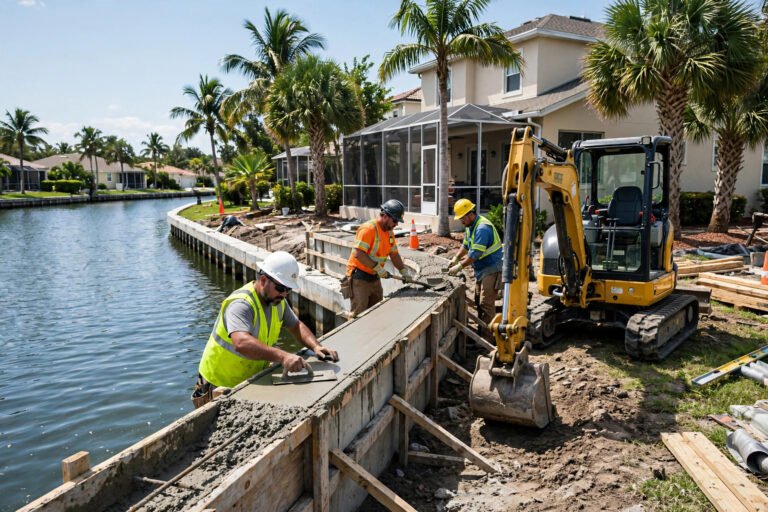
Riprap is not a weekend project you can do with a truckload of stone and a wheelbarrow. In Pinellas County, Pinellas Water and Navigation handles permits for docks, seawalls, and riprap countywide, and your city or the county building department issues the construction permit. The state side is governed by Florida’s environmental rules, and the general permit for riprap covers toe rock at an existing vertical seawall within the limits described above: slope no steeper than two to one, no more than ten feet out from the toe, rock one to three feet in diameter, no filling of seagrass beds, and no backfilling to create new usable upland or straighten the shoreline.
That general permit is helpful, but it is not a blanket approval. If your riprap would extend past the ten foot limit, fill a wetland area beyond the small allowance, or sit in a spot with protected habitat, the job needs a different permit path and more review. A reputable marine contractor will handle the permitting as part of the job and will tell you upfront which path your lot falls under. If a contractor suggests skipping permits entirely, that is a red flag: unpermitted shoreline work can draw enforcement, and it can complicate a future sale.
One more local note: riprap changes the look and use of your shoreline. Rock at the toe can make launching a kayak or wading in trickier, and on a narrow canal it narrows the usable water. Talk through the footprint with your contractor before the rock arrives, not after.
What Riprap Costs in Pinellas County
As of 2026, contractor pricing guides for Florida put riprap rock and boulder work in the neighborhood of $150 per linear foot as a rough planning figure, with real quotes varying by rock type, access, water depth, and how far the stone has to travel to your lot. A sheltered canal wall with easy barge access will price differently from an open bay wall that needs bigger stone and a longer haul. Treat any per foot number as a starting point for conversation, not a quote.
Several things move the price. Rock type is one: natural limestone boulders are the common choice in Florida, while clean concrete rubble can cost less but must meet the no protruding rebar rule. Access is another: a lot that a barge can reach directly is cheaper to serve than one that needs stone trucked in and craned over a house. Depth at the toe matters too, because deeper water needs more rock to build the same slope.
Get at least two written quotes, and compare them on the same basis: rock size range, slope, filter layer, permitted footprint, and whether the price includes permits and cleanup. A low bid that skips the filter layer or uses undersized stone is not a bargain. It is a pile of rock that will need redoing.
When Riprap Is the Wrong Call
Toe rock is not always the answer. If the wall is already leaning significantly, if panels are cracked through or missing, or if the yard behind the wall is sinking in large areas, rock at the toe will not save it. In those cases the honest recommendation is usually repair of the structural problem first, or replacement. Spending on rock before fixing a failing wall can also hide the warning signs, since the rock covers the base where problems show up first.
Riprap is also a poor fit where the water is too shallow or the lot is too tight for a proper slope. A slope squeezed steeper than two to one to fit a narrow canal does not dissipate waves the way it should, and it can push the rock footprint into the navigation channel. In those spots, other toe protection, such as a concrete toe footer or a vinyl sheet extension, may fit better. Your contractor should be willing to say when rock is not the right tool. If every problem gets the same answer, get a second opinion.
Finally, think about habitat. Riprap creates nooks and crannies that fish, crabs, and oysters use, and many homeowners like that side effect. But rock placed over seagrass or in a protected area is not allowed under the general permit. A contractor who checks the bottom before placing rock is doing right by you and by the waterway.
Keeping Toe Rock Working
Riprap is low maintenance, not no maintenance. Once a year, at low tide, walk the length of the rock and look for stones that have rolled out of place, gaps that have opened up, and places where the slope has slumped. After a major storm or a king tide cycle, check again. A few displaced stones are a small repair, and catching them early keeps the slope intact. Left alone, a gap in the rock lets waves reach the wall face again, and the scour starts right back up.
And keep your records. Note the date the rock was placed, the rock size, the permitted footprint, and the contractor who did the work. When you sell, that record answers a buyer’s questions before they are asked. For a full picture of what routine care should cover, see how long seawalls last in Pinellas County and what stretches that life.
Talk to a Local Seawall Expert
If the base of your seawall is starting to scour, or you are planning a repair and wondering whether toe rock belongs in the job, talk to someone who works on Pinellas County walls every week. Call (727) 316-5675 for a straight answer about whether riprap fits your wall, what the permitted footprint looks like on your lot, and what it should cost. A quick conversation now can save you a leaning wall later.
Q: How far can riprap extend from my seawall in Florida?
A: Under Florida’s general permit for riprap, rock at the toe of an existing vertical seawall may extend no more than ten feet waterward from the toe of the wall, on a slope no steeper than two horizontal to one vertical. In Pinellas County, Pinellas Water and Navigation permits riprap countywide.
Q: What size rock should be used for seawall riprap?
A: Florida’s rule calls for natural boulders or clean concrete rubble one to three feet in average diameter, with no reinforcing rods or other protrusions in the concrete pieces. Smaller stone tends to wash around, and much larger stone is hard to place neatly.
Q: Does riprap fix a leaning seawall?
A: No. Riprap protects the toe of a wall that is otherwise sound and stops scour from getting worse. It does not fix leaning panels, broken tiebacks, a failing cap, or soil loss behind the wall. If your wall is leaning or bowing, the structural problem needs to be addressed first.
Q: How much does seawall riprap cost in Pinellas County?
A: As of 2026, contractor pricing guides put riprap work in the neighborhood of $150 per linear foot as a rough planning figure, but real quotes vary with rock type, water depth, barge access, and haul distance. Get at least two written quotes on the same basis, including rock size, slope, filter layer, permits, and cleanup.